
Make your own mascara, test the ideal ratio of waxes and oils, and find out whether a DIY mascara can keep your lashes looking good without the unwanted panda effect. 🐼
Mascara isn’t exactly something humanity couldn’t survive without. But let’s be honest, sometimes a few strokes of the wand can work an almost miraculous transformation on a sleepy morning face. And if you’re already mixing your own lip balms, scrubs or other cosmetic DIY creations at home, why not try making mascara too?
But be careful. Simply mixing oil, wax and something black doesn’t automatically mean you’ll end up with a good mascara. If the mixture is too oily, it may start transferring onto your eyelids during the day – and instead of beautifully defined lashes, you end up with an unplanned panda look.
It won’t be a waterproof mascara for an all-day festival in the rain. But as a cosmetic DIY experiment? Definitely worth a try.
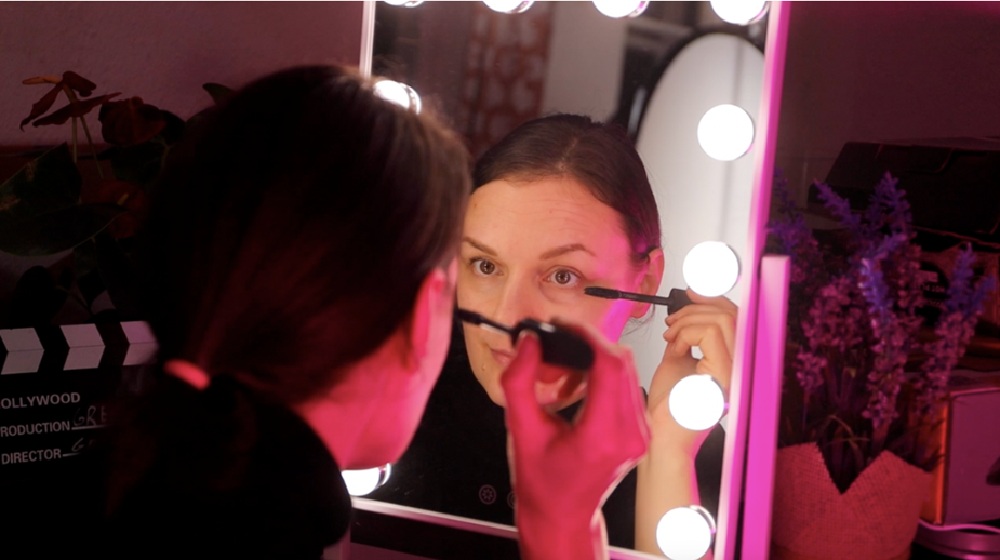
Source: GreenScan
🧪 What You’ll Need for 10 g
5 g castor oil
It is thicker than most common oils and helps distribute the pigment evenly across the lashes.
1.5 g jojoba oil (alternatively coconut oil or a 50/50 jojoba–coconut oil blend)
This softens the mixture slightly so it can be picked up easily with a mascara wand.
1.2 g beeswax
It gives the mascara structure and helps it stay where it should.
0.8 g carnauba wax
It is quite hard and helps increase the mixture’s resistance to heat and smudging.
0.5 g candelilla wax
Another firmer wax that helps create a better consistency.
0.9 g black iron oxide CI 77499 (or activated charcoal)
This will be our black colour. Only use cosmetic-grade pigment that the supplier states is suitable for decorative cosmetics and use around the eyes.
0.1 g tocopherol, also known as vitamin E
It helps protect the oils from oxidation. Keep in mind that vitamin E is not a preservative against bacteria or mould.
Activated Charcoal?
At first glance, activated charcoal looks like the perfect DIY ingredient. It’s black, it’s popular, and you’ll find it in almost every other homemade mascara recipe online. We use it in the video too. But we think it’s slightly better to reach for cosmetic-grade pigment CI 77499, or black iron oxide specifically intended for cosmetic use.
⭐ How to Make It
- Prepare the pigment.
Place the black iron oxide in a small bowl or mortar, add part of the castor oil and grind it thoroughly into a smooth black paste without any lumps. - Melt the waxes.
Place the beeswax, carnauba wax and candelilla wax in a heat-resistant container and heat them in a water bath until completely melted. Do not boil! - Add the oils.
Stir the remaining castor oil and jojoba oil into the melted waxes. - Mix in the pigment.
Add the prepared black paste and stir thoroughly until the mixture is smooth and the colour is evenly distributed. - Add vitamin E.
Remove the container from the water bath, let the mixture cool slightly and stir in the tocopherol. - Fill the container.
Pour the still-liquid mascara into a clean, small cosmetic jar and leave it to set at room temperature.
Too Hard? Too Soft?
DIY cosmetics are a little bit of chemistry and a little bit of testing.
If the mascara is too hard, reduce the amount of carnauba wax by about 0.2 g in the next batch and replace it with the same amount of castor oil.
If it is too soft and tends to smudge, do the exact opposite.
Don’t try to rescue the consistency by simply pouring more oil into the finished container. The result may not mix evenly.
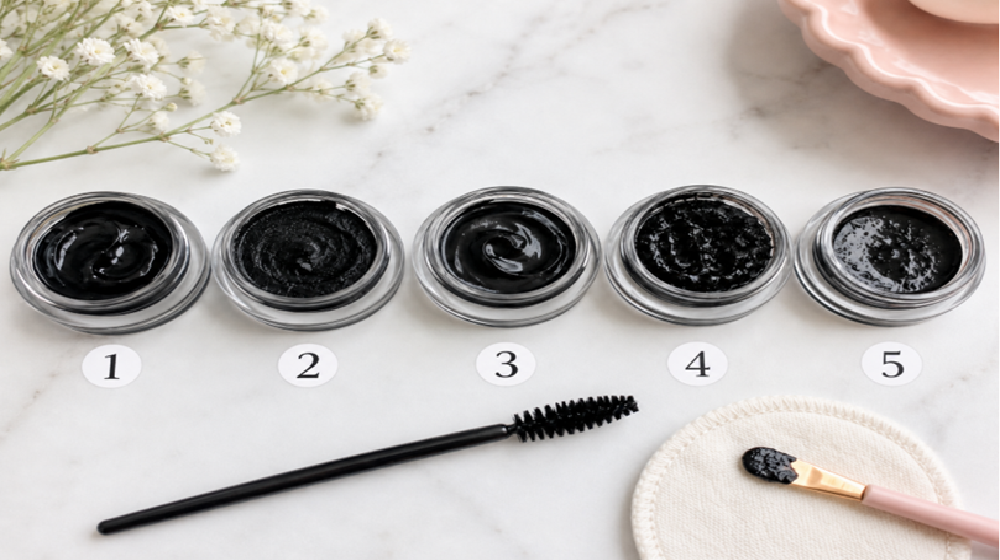
Source: AI-generated (ChatGPT, OpenAI)
GG tip: Feel free to make several smaller test batches and slightly change the ratio of waxes and oils in each one. It’s a great way to find the exact consistency that works best for you – and save yourself some time and frustration. 😊
Label the individual bowls, for example, 1 to 5. Put a mixture with a slightly different amount of wax in each one, apply it to your lashes with a clean mascara wand and compare how it spreads, how well it stays in place and whether it transfers onto your eyelids. Between individual tests, use a new clean wand or thoroughly wash and dry the previous one.
And then simply choose the winner. Write down the ratio of waxes and oils that works best for you, and next time you’ll know exactly what to do.
How to Apply It
- Use a clean and completely dry mascara wand.
- Pick up a small amount of the product and apply it from the roots to the tips of your lashes.
- Two thin coats are better than one giant black overload. Let the first coat dry for a moment before applying another.
- The result will mainly be darker and more defined lashes. Don’t expect a false-lash effect or a perfectly waterproof mascara.
- Professional mascaras often contain film-forming agents and other ingredients that help them dry, stay in place and resist sweat, water and smudging.
- This homemade water-free version is simpler.
- And that’s actually the whole point of DIY.
How to Remove It
- Because this mascara is mainly based on oils and waxes, an oil-based makeup remover or a small amount of cosmetic oil should remove it well.
- Apply it to a makeup pad, gently hold it against your closed eye for a few seconds, then wipe the mascara away.
- Don’t scrub. Your lashes are not a burnt frying pan.
How to Store It
- Keep the mascara tightly closed, in a dry place and away from direct sunlight or sources of heat.
- Try to keep water out of the product. Always use a clean and dry mascara wand.
- And most importantly, don’t add water to mascara that is starting to harden. Yes, the internet knows hacks like that too.
- Since this is a homemade product without laboratory testing for stability or microbiological safety, it’s best to prepare small batches.
- We recommend making a fresh batch approximately every 4 to 6 weeks.
- If the smell, appearance or consistency changes, throw the product away.
- After an eye infection or inflammation, do not continue using the mascara or the wand.
One More Important Warning
- Eyes 👀 are sensitive, so this is where extra caution is needed compared to something like a hand balm.
- Only use cosmetic ingredients suitable for the eye area. If the product stings after application, your eyes start watering 🥺, itching, or you experience any other irritation, remove it immediately and stop using it.
- Also, don’t share your mascara with anyone. 🙂
- A mascara wand isn’t a microphone. It doesn’t need to make its way around all your friends.

0 komentárov