
You usually won’t find it printed on the bottle, yet it can influence how a product behaves on your skin, whether it causes unnecessary irritation, and whether certain active ingredients or preservatives work properly.
With commercially manufactured cosmetics, the manufacturer takes care of this for us. But when we make our own toner, serum, or cream at home, pH is no longer just something you learned about in chemistry class. It becomes part of the formulation.
Source: GreenScan
pH Is More Than Just a Chemistry Number
Simply put, pH tells us whether an aqueous solution is acidic, neutral, or alkaline.
Values below 7 are considered acidic, pH 7 is neutral, and values above 7 are alkaline. The pH scale is logarithmic, so the difference between pH 5 and pH 6 is much greater than it may seem at first glance [1].
And here’s one common misconception. pH mainly applies to products that contain water. It can only be measured in water-based products because acidity and alkalinity are determined in an aqueous environment. Pure oils, butters, or anhydrous balms therefore do not have a measurable pH in the same way as a toner or serum.
Source: GreenScan
Your Skin Is Naturally Acidic – And That’s a Good Thing
The surface of healthy skin is not neutral. It is naturally slightly acidic.
You’ll often come across the value of pH 5.5, but this is not one universal number that applies to every person or every part of the body. Skin pH is influenced by age, the measurement site, sweat, sebum, cosmetics, cleansing habits, and the surrounding environment.
Research has shown that the natural pH of the skin surface is, on average, below 5. This environment has been associated with a healthier skin barrier and conditions that better support the natural skin microbiome [2].
This mildly acidic environment is sometimes referred to as the acid mantle. It plays an important role in enzyme activity within the outermost layer of the skin, skin barrier repair, proper shedding of dead skin cells, and protection against certain unwanted microorganisms [3].
That doesn’t mean acidic skin kills bacteria the way vinegar removes limescale. Rather, it creates a carefully balanced environment in which the skin can function properly.
What Do Water and Cleansing Do to Skin pH?
You might expect that harsh soap is the biggest problem. However, even rinsing your skin with plain water can temporarily increase its pH.
Studies show that after washing, it may take several hours for the skin to return to its original pH [2, 4]. Of course, this doesn’t mean we should stop washing. The skin is capable of restoring its own balance.
The problem is more likely to arise from frequent washing, using strongly alkaline products, or choosing unsuitable cleansing agents, especially if the skin is already dry, sensitive, or has a compromised barrier.
One important detail: the gentleness of a cleanser is determined by much more than its pH. The type and amount of surfactants, the contact time with the skin, water temperature, and frequency of use all play a role. That’s why two products with the same pH can behave very differently on the skin [4, 5].
pH 5.5 Is Not a Magic Number
The label “pH 5.5” may sound scientific and reassuring. However, it doesn’t automatically mean that a product is high-quality, gentle, or suitable for your skin.
A cosmetic product is a complex formulation. Its performance depends on the ingredients used, their concentrations, how they interact, the preservation system, stability, and the way the product is intended to be used.
Likewise, not every cream, toner, or serum has to have a pH of exactly 5.5. The appropriate value depends on the product’s purpose and formulation.
Toners, Hydrating Serums, and Creams
Products designed for everyday skincare are often slightly acidic, with a pH close to that of the skin.
That doesn’t mean a toner with a pH of 5.2 is automatically excellent while one with a pH of 6 is poor. pH is only one piece of the puzzle.
A toner also doesn’t have to “restore the skin’s pH” after every cleansing step. Modern gentle cleansers can themselves be formulated to be mildly acidic. The main role of a toner may instead be to hydrate the skin or deliver specific active ingredients.
AHA Acids
For exfoliating products containing AHA acids, pH really does matter, but knowing just one number is still not enough.
Their effectiveness and irritation potential depend on the type of acid, its concentration, the final pH, the amount of free acid, the application time, and the condition of the skin. At lower pH levels, a larger proportion of the acid is present in its active form, but the risk of stinging, irritation, or skin damage may also increase.
For cosmetic products containing AHA acids intended for home use, scientific literature often recommends a maximum concentration of 10% and a final pH of at least 3.5 [6]. However, this is not a recipe suggesting that you can simply mix a 10% acid solution at home and adjust it to pH 3.5. Safety depends on the entire formulation.
For this reason, strong homemade acid peels are not a good DIY experiment.
Source: GreenScan
Vitamin C
With vitamin C, reading the label on the front of the package isn’t enough either. There are several different forms of vitamin C, and each behaves differently.
Research has shown that pure L-ascorbic acid requires a pH below 3.5 to penetrate the skin effectively [7]. However, a product this acidic may irritate sensitive skin.
Vitamin C derivatives, on the other hand, can remain stable and effective at different pH levels. Therefore, it is not true that every vitamin C serum has to have a pH of 3.
Retinol
You may have come across the simple rule that retinol products should have a pH of around 5 to 6. In reality, however, the stability of retinoids is influenced by much more than pH alone.
The specific type of retinoid, the formulation itself, exposure to light and oxygen, storage temperature, packaging, and shelf life all play an important role. Studies of commercial cosmetic products have demonstrated significant differences in retinoid stability depending on the individual formulation [8].
Simply measuring the pH of a cream is therefore not enough to determine whether the retinol it contains will remain stable and effective.
Do We Need to Layer Skincare According to pH?
Online, you can find advice claiming that skincare products should be applied from the lowest pH to the highest, with waiting periods of up to twenty minutes between each layer.
For a regular skincare routine, this is usually unnecessary.
Commercial cosmetic products are designed to work as intended when used according to the manufacturer’s instructions. It is far more important not to overload your skin with several potentially irritating active ingredients at the same time.
A simple routine is usually all you need:
- Cleanser
- Toner (if you use one)
- Serum
- Moisturizer
- Sunscreen in the morning
When using acids, retinoids, or other potent active ingredients, always follow the manufacturer’s recommendations and pay attention to how your skin responds. More active ingredients do not automatically produce better results.
DIY Cosmetics: This Is Where pH Really Matters
When making cosmetics at home, pH affects much more than just how comfortable a product feels on the skin.
It can also influence:
- the stability of certain active ingredients
- the effectiveness of some preservatives
- the stability of an emulsion or gel
- the final texture of the product
- the risk of skin irritation
Source: GreenScan
For this reason, pH should always be measured after the product has been fully prepared and thoroughly mixed. With some formulations, it is advisable to measure it again after a period of storage, as the pH may change over time.
pH Test Strips or a pH Meter?
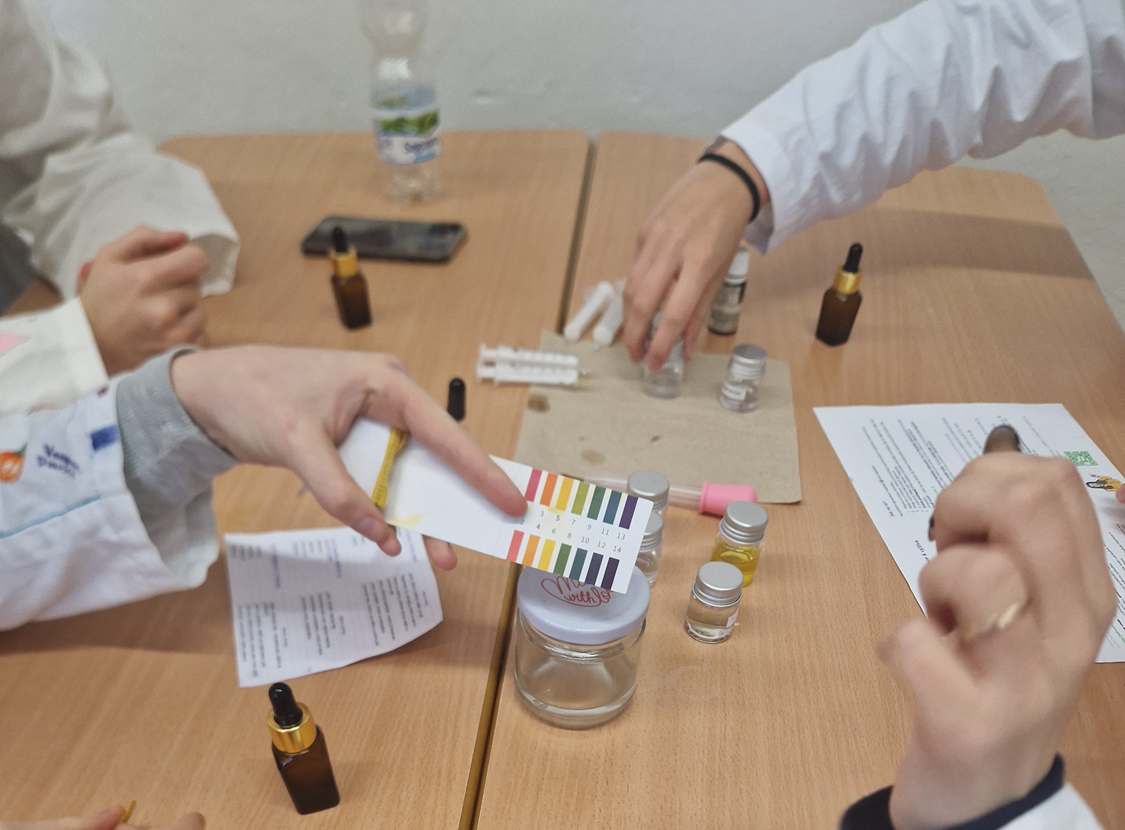
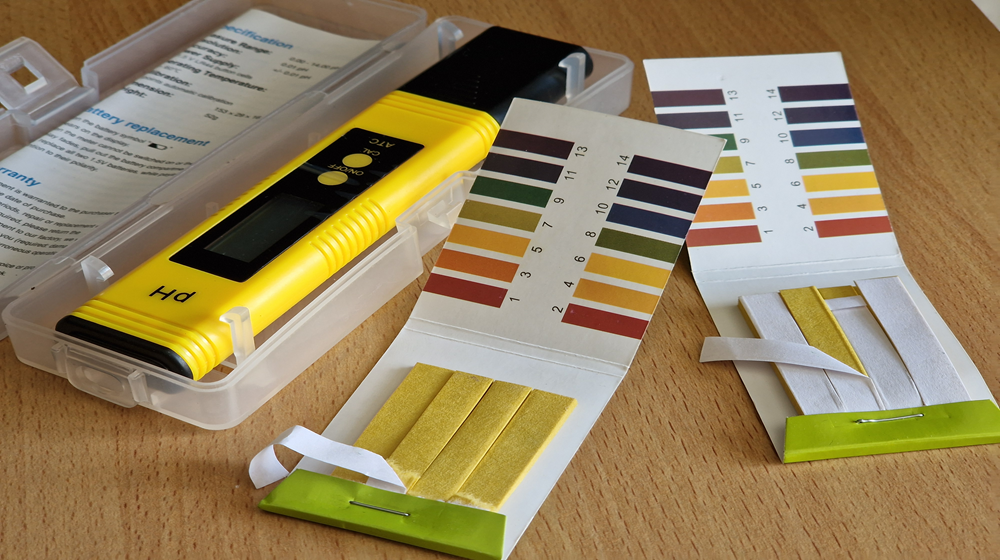
Indicator strips are suitable for basic orientation. However, with coloured, thick, or cloudy products, the results may be difficult to interpret accurately.
A properly calibrated pH meter equipped with an electrode suitable for the sample type provides much more accurate measurements. Even an expensive pH meter, however, is of little use if it is not correctly calibrated or if the measurement is performed improperly.
pH is not a value that you measure once and then forget about.
Source: GreenScan
The Right pH Is Not a Preservative
This is particularly important in DIY cosmetics.
If a product contains water, a hydrolat, a herbal infusion, or any other water-based ingredient, bacteria, yeasts, and moulds can grow in it.
Just because a toner has a pH of 5 does not mean it is microbiologically safe. Many microorganisms are able to grow within the pH range commonly found in cosmetic products. Furthermore, preservative performance depends on the specific preservative used, its concentration, the product’s pH, its packaging, and the overall formulation [9].
The correct pH does not replace:
- an appropriate preservative system
- hygienic manufacturing practices
- clean containers and equipment
- accurate ingredient dosing
- suitable packaging
- microbiological testing
For commercial cosmetics, the effectiveness of the preservative system is also verified by a challenge test, in which the product is deliberately inoculated with microorganisms to determine whether the preservative system can effectively control their growth [9].
So, a homemade toner is not safe to use for several months simply because it still smells pleasant, looks unchanged, and has been stored in the refrigerator. Microbial contamination is often impossible to detect by sight or smell alone.
What About Anhydrous Cosmetics?
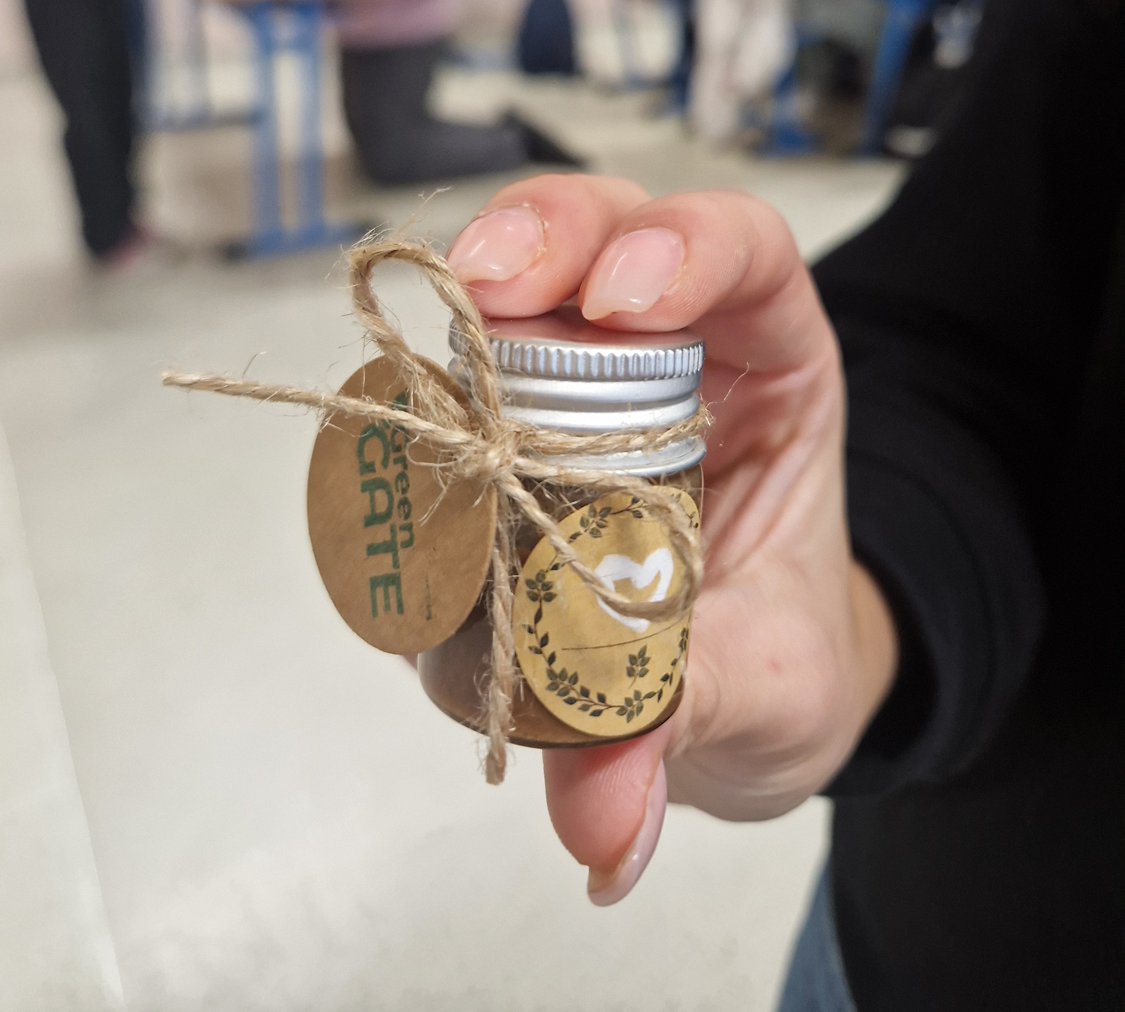
A balm made entirely from oils, or a blend of oils and butters, generally does not require pH measurement. Since these products contain no water, they also present a much lower risk of microbial growth than water-based formulations.
That doesn’t mean they last forever.
Oils can oxidise and become rancid. And if you repeatedly dip wet fingers into the jar or water gets inside during use, the situation changes.
So remember: clean hands, a dry spatula, and no water in the container. Even such small details can make a significant difference.
Source: GreenScan
How Can You Adjust the pH of Homemade Cosmetics?
pH should always be adjusted very carefully, using small amounts of a suitable diluted acid or alkali solution.
It is not a good idea to simply sprinkle citric acid or baking soda into a product by eye. It’s very easy to overshoot the desired pH, after which you’ll end up alternately adding acid and alkali until your formula resembles a chemistry stew.
After each addition, the product should be thoroughly mixed and the pH measured again.
When following a recipe, you should know:
- what the final pH should be
- why that particular pH is required
- whether the ingredients remain stable at that pH
- whether the chosen preservative works effectively at that pH
- how to measure and, if necessary, adjust the pH correctly
Žaneta: If a recipe doesn’t specify the final pH, explain how to measure it, or provide information about preservation, I would be cautious, especially if it’s a serum, toner, or cream containing water. “Natural” does not automatically mean safe, and homemade does not mean we can skip the chemistry.
GG tip: pH is important, but it does not, by itself, determine whether a cosmetic product is high-quality or safe.
A product with a pH of 5.5 may still contain poorly chosen surfactants, irritating fragrance ingredients, or an ineffective preservative system. Another product may have a slightly different pH yet be well formulated and perfectly suitable for your skin.
So don’t focus on a single number. Look at the entire formulation, the ingredients, their concentrations, how the product is used, its packaging, and your skin’s individual needs.
Because, just as with ingredient lists, marketing isn’t what ultimately matters. What matters is what’s actually inside the product, and how all of its components work together.
Source
[1] Buck et al. Measurement of pH. Definition, standards, and procedures. Pure and Applied Chemistry, 2002, 74(11), 2169–2200.
https://doi.org/10.1351/pac200274112169
[2] Lambers et al. Natural skin surface pH is on average below 5, which is beneficial for its resident flora. International Journal of Cosmetic Science, 2006, 28(5), 359–370.
https://pubmed.ncbi.nlm.nih.gov/18489300/
[3] Schmid-Wendtner, Korting. The pH of the skin surface and its impact on the barrier function. Skin Pharmacology and Physiology, 2006, 19(6), 296–302.
https://pubmed.ncbi.nlm.nih.gov/16864974/
[4] Blaak, Staib. The Relation of pH and Skin Cleansing. Current Problems in Dermatology, 2018, 54, 132–142.
https://pubmed.ncbi.nlm.nih.gov/30130782/
[5] Ananthapadmanabhan et al. Cleansing without compromise: the impact of cleansers on the skin barrier and the technology of mild cleansing. Dermatologic Therapy, 2004, 17, 16–25.
https://pubmed.ncbi.nlm.nih.gov/14728695/
[6] Kornhauser, Coelho, Hearing. Applications of hydroxy acids: classification, mechanisms, and photoactivity. Clinical, Cosmetic and Investigational Dermatology, 2010, 3, 135–142.
https://pmc.ncbi.nlm.nih.gov/articles/PMC3047947/
[7] Pinnell et al. Topical L-ascorbic acid: percutaneous absorption studies. Dermatologic Surgery, 2001, 27(2), 137–142.
https://pubmed.ncbi.nlm.nih.gov/11207686/
[8] Temova Rakuša et al. Retinoid stability and degradation kinetics in commercial cosmetic products. Journal of Cosmetic Dermatology, 2021, 20(7), 2350–2358.
https://pubmed.ncbi.nlm.nih.gov/33206444/
[9] Halla et al. Cosmetics Preservation: A Review on Present Strategies. Molecules, 2018, 23(7), 1571.
https://pubmed.ncbi.nlm.nih.gov/29958439/

0 Comments