
Authors: Mark Medved (student from Faculty of Environmental protection) and Katrin Školnik Škrabe
Have you ever thought about using dietary supplements to build muscle? Are they really necessary, or just a passing trend? Nowadays, with Instagram, TikTok, and fitness challenges everywhere, having a “perfect body” feels like a must for many young people—both guys and girls. That’s why a lot of them turn to supplements, hoping to get bigger muscles and better form. But do supplements actually work? And, more importantly, are they safe?
What exactly are dietary supplements?
Dietary supplements are products intended to complement the diet by helping to improve or maintain an adequate intake of certain nutrients or by supporting specific physiological functions in the body. They contain concentrated sources of individual or combined nutrients and other substances with nutritional or physiological effects, such as vitamins, minerals, trace elements, fatty acids, amino acids, proteins, plant extracts, caffeine, or other bioactive compounds. Dietary supplements are available in different forms, including tablets, capsules, powders, liquids, and bars.
However, not all supplements have the same purpose or the same level of scientific support. Some supplements may be useful in specific situations, while others have limited evidence of effectiveness. For example, protein powders can help people who cannot meet their protein needs through food alone, while creatine monohydrate is one of the most researched supplements and has been shown to support strength and high-intensity exercise performance in healthy adults. In contrast, BCAA supplements provide limited additional benefits when a person already consumes enough high-quality protein.
Dietary supplements should therefore complement a balanced diet, sufficient hydration, and regular physical activity rather than replace them.
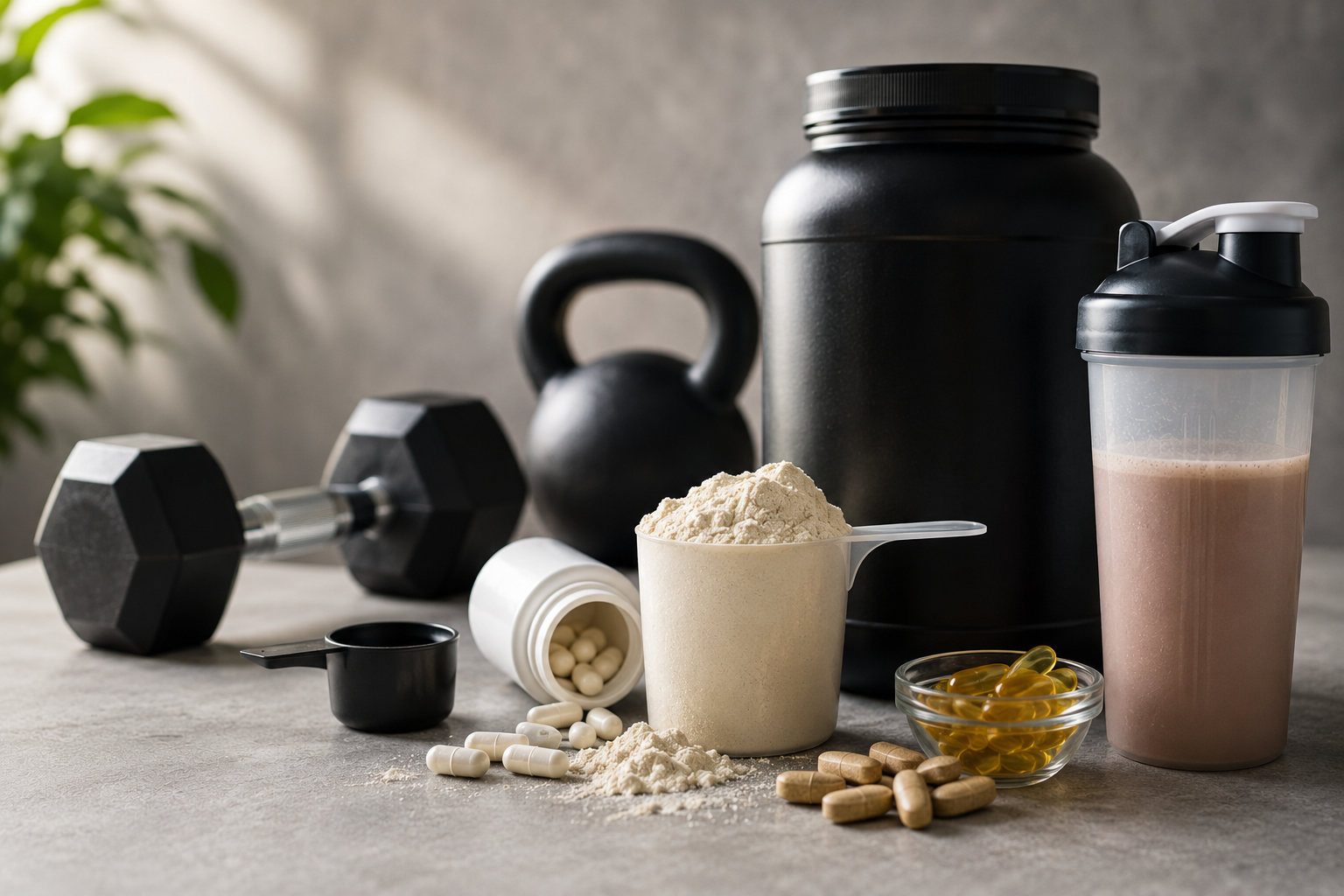
Source: AI-generated (ChatGPT, OpenAI)
Common Myths and the Truth
🙋🏼♀️Myth 1: More is better
Some people think that taking more supplements will help them build muscle faster, gain more strength, or have more energy. However, the truth is that your body has limits. Protein is important for muscle growth and recovery, but consuming more than your body needs will not automatically build extra muscle. Excessive intake of some nutrients can also put unnecessary stress on the body.
The same applies to vitamins and minerals. Taking very high doses does not make them more effective and may even be harmful. For example, high doses of preformed vitamin A, such as retinol from supplements, can accumulate in the body and become toxic. They may damage the liver, cause birth defects during pregnancy, and interact with certain medicines.
🙋🏻Myth 2: Natural supplements are always safe
Just because something is natural doesn’t mean it’s harmless. Some plant extracts can affect your hormones, damage your liver, or cause allergic reactions. Natural isn’t always safe.
🙋🏼♂️Myth 3: Supplements are safe for everyone
Everyone’s body reacts differently. What works well for one person might cause problems for another. That’s why talking to a healthcare professional before starting supplements is so important.
🙋🏻♀️Myth 4: If something has been used for thousands of years, it must work
A long history of traditional use does not by itself prove that a product is effective or safe. Traditional remedies may provide benefits in some cases, but their effects and safety need to be evaluated using well-designed scientific studies and reliable safety data. Scientific evidence helps us understand whether a product truly works, how it works, and whether it can be used safely.
What Should You Watch Out For?
While many supplements are safe when used properly, risks arise when people lack knowledge or want quick results. Be especially careful about:
- Overloading liver and kidneys: your body must process all substances, including excess ones.
- Cardiovascular problems: stimulants in some supplements can raise blood pressure or cause irregular heart rhythms.
- Hidden ingredients: some supplements from abroad or unverified online stores may contain banned substances, including steroids.
How Should You Use Supplements—If at All?
- Your main focus should always be on eating well. Supplements are just extras, not the foundation of your diet.
- Always consult a doctor or nutritionist before starting any supplement.
- Choose products wisely—check the brand, certifications, and ingredients.
- Remember: less is more. Good nutrition and smart training beat piles of pills and powders any day.
In the End…
Success comes from consistency, discipline, and taking care of your body—not shortcuts. Muscles don’t grow overnight. They grow through good sleep, regular training, and most importantly—putting your health first. Supplements aren’t magic potions; they’re just tools. And tools only work when used correctly.
Sources
- American Cancer Society. (n.d.). Dietary supplements: What is safe? https://www.cancer.org/cancer/managing-cancer/treatment-types/complementary-and-integrative-medicine/dietary-supplements/safety.html (Accessed 9 July 2025).
- Naravna dopolnila. (2022). Vse kar morate vedeti o prehranskih dopolnilih. https://naravnadopolnila.si/blogs/news/test?srsltid=AfmBOoqeW2VjOhfebWZrWTF5DSlzyDrk7NVx8n3HihL-G8MWqHQ5ctfT (Accessed 9 July 2025).
- Zveza potrošnikov Slovenije. (n.d.). Zdravje, zdravila in prehranska dopolnila. https://www.zps.si/nasveti-in-vodniki/kategorija/zdravje-zdravila-in-prehranska-dopolnila-82 (Accessed 9 July 2025).
- Nacionalni inštitut za javno zdravje. (2024). Prehranska dopolnila ne zdravijo in niso bližnjica do zdravja. https://nijz.si/zivljenjski-slog/prehrana/prehranske-politike-in-ukrepi/prehranska-dopolnila-ne-zdravijo-in-niso-bliznjica-do-zdravja/ (Accessed 9 July 2025).
- European Food Safety Authority. (n.d.). Food supplements. https://www.efsa.europa.eu/en/topics/topic/food-supplements (Accessed 9 July 2025).
- Office of Dietary Supplements. (n.d.). Dietary supplements for exercise and athletic performance: Health professional fact sheet. National Institutes of Health. https://ods.od.nih.gov/factsheets/ExerciseAndAthleticPerformance-HealthProfessional (Accessed 9 July 2025).
- Nacionalni inštitut za javno zdravje. (n.d.). Prehranska dopolnila. Prehrana.si. https://www.prehrana.si/zivila/prehranska-dopolnila/12-staticne-vsebine (Accessed 9 July 2025).

0 Comments