We are living and growing up in a wild, fast-paced world where trends change faster than TikTok dances. When it comes to “beauty standards,” it feels like there’s a new rulebook every other week. But here’s the secret: what’s “in” today is always changing. What truly matters is how you feel about YOU.
The Ever-Changing Face of “Beauty”
If we look back at history or across different cultures, “beauty” has always been a moving target. In different eras, people have gone to extremes to fulfill ideals—from using restrictive corsets for tiny waists in Europe to foot-binding in parts of Asia. While those trends lasted for decades, today’s digital life means a trend might last less than a few weeks.
Think about it. Not long ago, one specific look dominated magazines. Now? We see more diversity—different body shapes, skin tones, hair textures, and styles. This is awesome, but it comes with a “double-edged sword” effect. While social media celebrates uniqueness, it also bombards us with filtered, edited, and unrealistic images.
GG tip: You can find videos on these topics here: https://green-gate.eu/video-bites/
The Reality Check: Central Europe & Beyond
Research highlights that while social media helps internalize homogeneous beauty standards, Gen Z is actively resisting and advocating for inclusivity [1]. However, the cost of comparison remains high:
- UK: The Royal Society for Public Health (RSPH) found that 70% of young people (14-24) felt self-conscious about their appearance after viewing “flawless” photos online [2].
- Slovakia & Czechia: A recent study confirmed that girls are significantly more concerned about their appearance than boys, with a link between TikTok usage and these concerns [3]. Shockingly, over 31% of Slovak secondary school students showed symptoms of eating disorders [6].
- Slovenia: The situation in Slovenia mirrors these regional trends. National data suggests that dissatisfaction with body image is a leading factor in the decline of mental health among Slovenian youth. Similar to their Slovak peers, Slovenian adolescents report high levels of pressure to conform to “ideal” body types seen on social media, which directly correlates with lower self-esteem and increased anxiety.
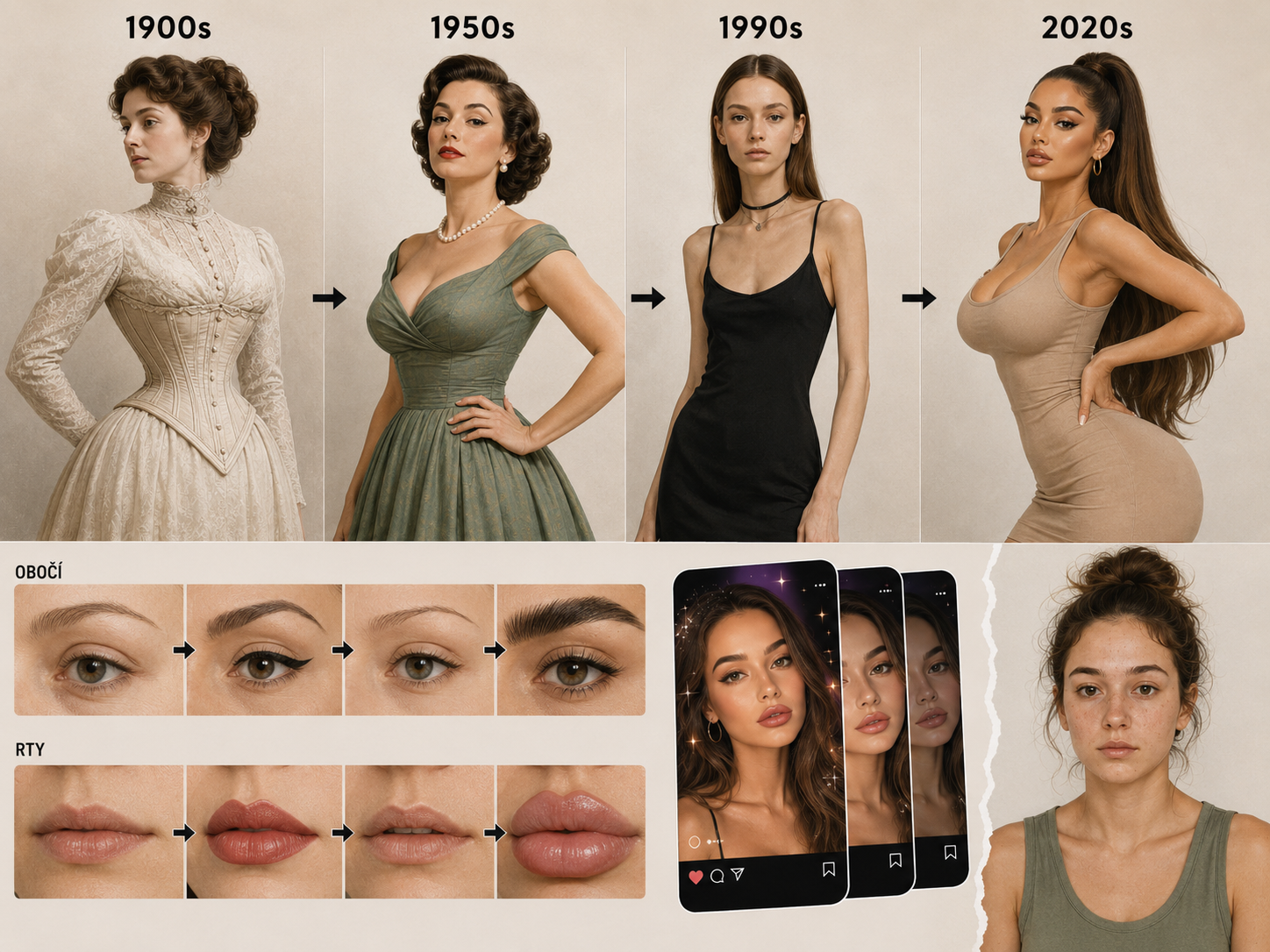
Source: AI-generated (ChatGPT, OpenAI)
Your Health, Your Planet, Your Beauty
Gen Z is leading a revolution. Unlike older generations, you understand that health, beauty, and the environment are all connected.
- Holistic Health & Mental Well-being: For you, beauty isn’t just what you put on your skin; it’s about what you put in your body and how you treat your mind. Global research shows that 64% of Gen Z recognizes the link between skin health and overall health [4]. You’re prioritizing hydration, nutrition, and emotional well-being—the true “beauty from within.”
- Sustainable Choices: You’re also hyper-aware of the planet. Nearly 60% of Gen Z shoppers have stopped buying brands that aren’t environmentally transparent. In Europe, 68% view sustainability as a core value when choosing products [5]. You’re looking for natural ingredients, refillable packaging, and ethical sourcing. This isn’t just a trend; it’s a value-driven choice to protect the future.
The True Glow-Up: Self-Confidence and Self-Acceptance
The real “glow-up” comes from feeling good about who you are, just as you are.
Social media use is incredibly high: 97% of EU youth use the internet daily, and 88% are active on social networks [9, 10]. However, the digital space can be hostile—49% of youth have experienced cyberbullying [8]. This negative content can chip away at your self-esteem, making critical thinking more important than ever.
A Message for Youth Workers
It is crucial to help young people navigate this landscape. We need to:
- Encourage critical thinking: Help youth deconstruct media messages and “perfect” filters.
- Promote positive self-talk: Use resources like those from YoungMinds to emphasize that unfollowing toxic accounts is a form of self-care [7].
- Acknowledge regional pressures: Understand that in countries like Slovakia and Slovenia, the pressure for “perfection” is often amplified by close-knit social circles and digital comparison.
Your Personal Power-Up
- You are unique. You are enough. Your worth is NOT defined by a “like” or a filter.
- Focus on function: Appreciate what your body can do (dance, run, hug, create), not just how it looks.
- Curate your feed: Be the boss of your algorithm. Follow creators who promote authenticity.
- Talk about it: If you’re struggling, talk to a trusted friend, youth worker, or professional. You are not alone.
Remember: Beauty is a feeling, not a look. Trends will come and go, but your self-worth is timeless. Embrace it!
Sources
[1] Niklová, M., & Zošáková, K. (2024). Social Media and Body Image from the Perspective of Secondary School Youth. Czasopisma. (Available via ResearchGate)
[2] Royal Society for Public Health (RSPH). (2017). #StatusOfMind: Social media and young people’s mental health and wellbeing. https://www.rsph.org.uk/our-work/publications/statusofmind/
[3] Niklová, M., & Zošáková, K. (2024). Body image a používanie sociálnych sietí u mládeže na Slovensku. https://www.researchgate.net/publication/378775400_Body_image_a_pouzivanie_socialnych_sieti_u_mladeze_na_Slovensku
[4] FMCG Gurus. (2024). Global Trends in Health & Wellness. https://fmcggurus.com/blog/how-generation-z-are-redefining-health-and-wellness/
[5] Attest. (2025). Gen Z Beauty Trends 2025: Authenticity, Inclusivity, & More. https://www.askattest.com/blog/consumer-trends/gen-z-beauty-trends
[6] Dulovics, M., & Kollárová, S. (2023). Monitoring the Prevalence of Eating Disorder Symptoms in Slovak Secondary School Students. https://www.researchgate.net/publication/376043224_Monitoring_the_Prevalence_of_Eating_Disorder_Symptoms_in_Slovak_Secondary_School_Students
[7] YoungMinds. Body Image. https://www.youngminds.org.uk/find-help/feelings-and-symptoms/body-image/
[8] EUROSTAT (2023). 50% of young people encounter hostile messages online. https://ec.europa.eu/eurostat/web/products-eurostat-news/w/ddn-20240801-1
[9] Eurostat. (2024). Young people – digital world. https://ec.europa.eu/eurostat/statistics-explained/index.php?title=Young_people_-_digital_world
[10] Eurostat. (2025). 97% of young people in the EU use the internet daily. https://ec.europa.eu/eurostat/web/products-eurostat-news/-/ddn-20250715-1

0 Comments