
Why Colour Convinces Us So Easily
Let me tell you something manufacturers know very well: a product is often sold not only by its ingredients, but by its appearance. Colour can create an impression within seconds. It can make a product feel clean, fresh, luxurious, playful or natural. Green can look eco-friendly, blue can feel clean, pink can seem gentle, and gold can suggest luxury. But just because a product looks good does not mean it is better for our skin, our body or nature.
Colourants are not automatically bad. In decorative cosmetics, colour is often the main function of the product. When we buy red nail polish, pink lipstick or purple eyeshadow, we actually want colour. But the real question is: do we need coloured shampoo, blue toothpaste with glitter, pink syrup or a yellow-coloured tablet?

Source: pixabay.com
When the Ingredient List Looks Like a Code: +/- CI 77492, CI 77499, CI 15850…
On decorative cosmetic products, you may come across a label such as:
+/- CI 77492, CI 77499, CI 15850, CI 77891, CI 47005, CI 42090
Sometimes, when ingredient lists are copied, the notation may become distorted. For example, CI 77492 may appear as 177492, or CI 47005 may appear as C147005. That is why it is useful to know that the abbreviation CI stands for Colour Index, a numbering system used to identify dyes and pigments.
The symbol +/- means “may contain”. It is mainly used in colour ranges where one product comes in several shades. For example, an eyeshadow palette, foundation, nail polish or face paint may share the same basic formula, while the individual shades differ in the pigments they contain. That is why manufacturers list pigments that may be present in some variants of the product.
The European CosIng database serves as an overview of cosmetic ingredients and the names used for labelling cosmetic products [1]. The European Commission also points out that the mere presence of a substance in the database does not mean that it can automatically be used in any cosmetic product. For colourants, preservatives and UV filters, it is important whether they are authorised in the relevant annexes of the Cosmetics Regulation, and every product must have its own safety assessment [2].
Where Colourants Come From
Colourants and pigments can have different origins. Some are mineral-based, such as iron oxides used in foundations, powders or eyeshadows. Others are plant-based, such as colourants from beetroot, turmeric, chlorophyll, carotenoids or annatto. There are also colourants of animal origin, such as carmine, also known as cochineal, which is obtained from the cochineal insect.

Cochineal insect. Source: ChatGPT
Cochineal is used as a red colourant in foods, drinks, cosmetics and medicines. It gives that beautiful deep red colour. Its main colouring component is carminic acid, and in carmine it is present in a complex form. For most people, it does not pose a problem, but scientific literature describes immediate allergic reactions, including anaphylaxis, especially in sensitive individuals [3].
Žaneta: For me, this is more of a moral issue. Yes, crushed female cochineal insects have been used as a colourant for thousands of years [4]. But the question is: is it still necessary today?
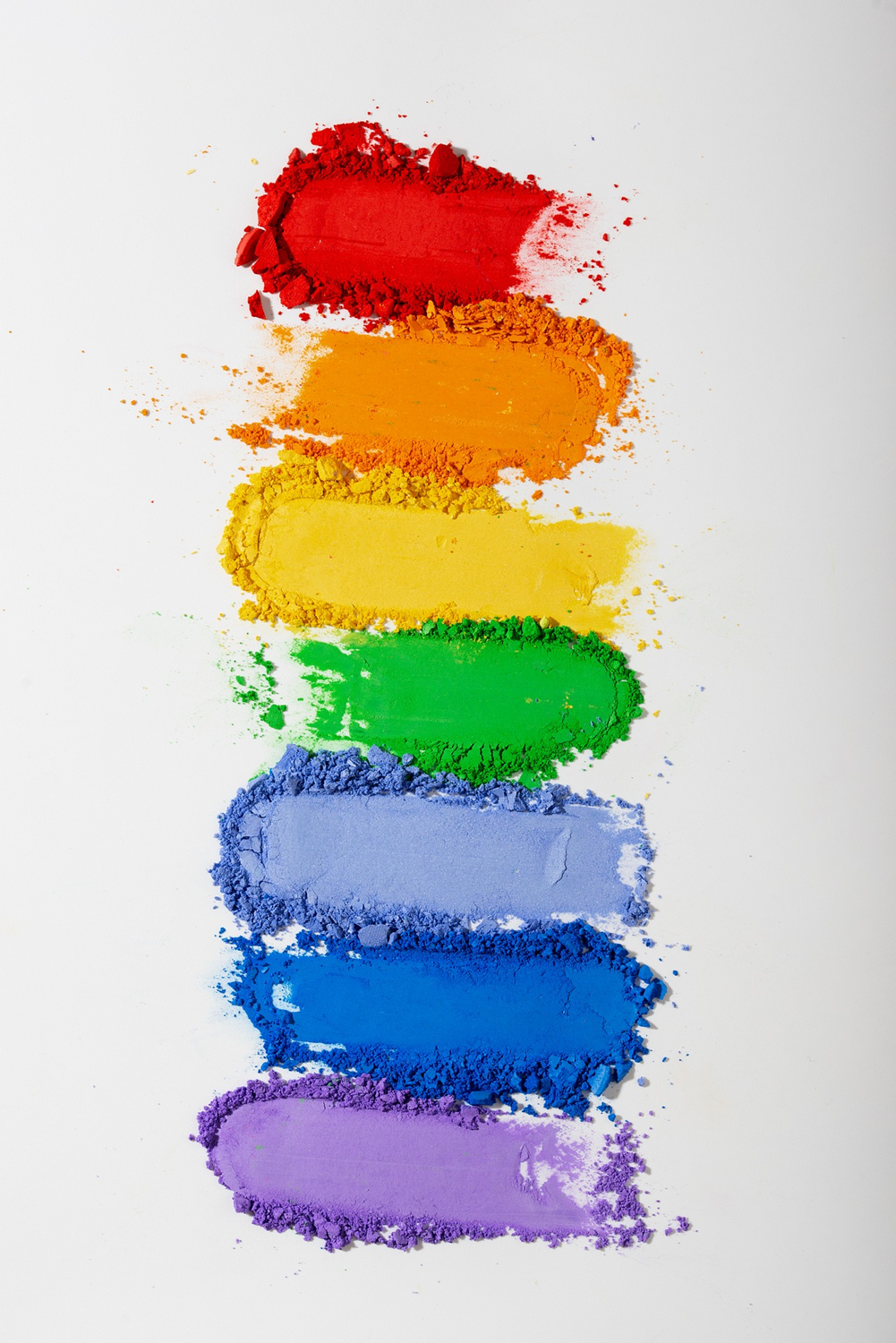
A large group consists of synthetic colourants. These are often bright, stable and technologically convenient. But that stability is a double-edged sword. What is an advantage for the product can become a problem for the environment if the substance breaks down poorly and enters wastewater [5].
Source: pixabay.com
When Colour Makes Sense
In decorative cosmetics, colour is the essence of the product. Lipstick is meant to colour the lips, nail polish is meant to colour the nails, foundation is meant to even out skin tone, and eyeshadow is meant to create a visual effect. In these cases, colourants make sense, although it is still useful to know what is in the product, especially if we have sensitive skin, allergies or use the product very often.
Colour may also make sense in some medicines. It can help distinguish different strengths of a medicine, reduce the risk of confusing tablets, or, in some cases, help protect the active substance from light. The European Commission states that titanium dioxide is used in medicinal products, among other things, as a pigment, opacifier and part of a protective coating that may help preserve the stability of the active substance [6].
However, this does not mean that every use of colour is automatically necessary. There is a difference between colour that helps with the safe use of a medicine and colour that only makes a product more visually appealing.
When Colour Is More Likely Unnecessary
It makes sense to be more cautious with products where colour does not contribute to the product’s function. Shampoo does not have to be green to wash hair well. Toothpaste does not have to be blue to clean teeth. Shower gel does not have to be neon pink to remove dirt. And children’s sweets do not have to glow in every colour to taste good.
The issue is not only the mere presence of a colourant. Exposure is important: how often we use the product, how long it stays in contact with the body, whether it is rinsed off, whether it enters the mouth, and whether it is used by a child, pregnant woman, allergic person or someone with a damaged skin barrier. We assess eyeshadow used occasionally differently from toothpaste used twice a day.
Colourants in Food: An E Number Is Not a Dirty Word, But It Is Worth Reading the Label
In food, colourants belong to the category of additives. EFSA states that food colours are used, for example, to replace colour lost during processing, enhance natural colour, or add colour to foods that would otherwise be colourless or have a different appearance. In the EU, authorised food colours must be listed on the label by name or E number and are subject to safety evaluation [7].
For some colourants, the EU requires a specific warning. Foods and drinks containing the colours E102, E104, E110, E122, E124 or E129 must carry a warning that they may have an adverse effect on activity and attention in children [8]. This does not mean that every child will react after one coloured lemonade. It means that with frequent consumption, and especially in more sensitive children, it makes sense to be more cautious. And in my opinion, these colourants are unnecessary because, apart from appearance, they do not bring any real benefit.
There are plenty of available sources about colourants in food, so this topic deserves its own separate discussion.
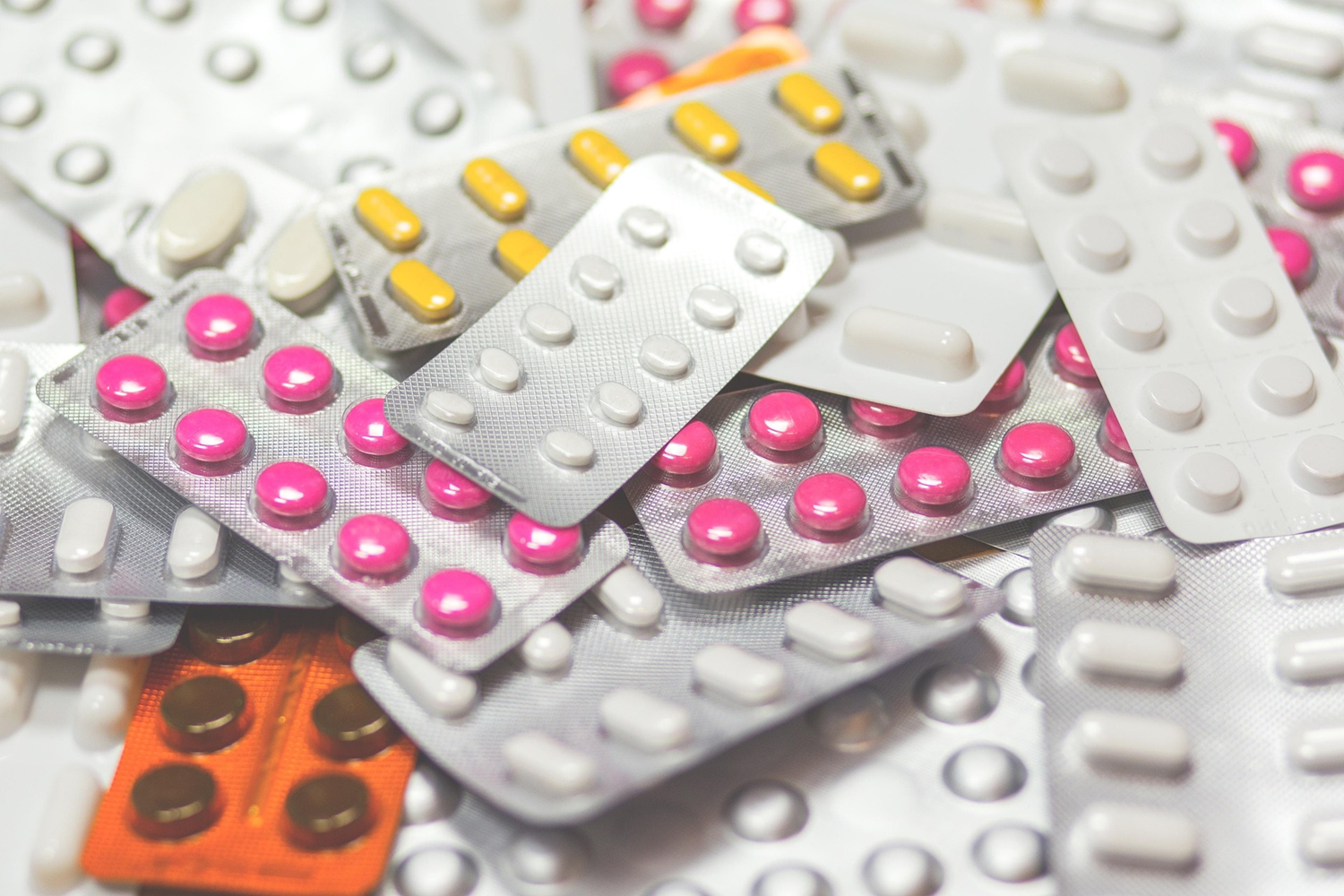
What About Medicines? Pink, Blue, Yellow or White Pills?
A medicine is not a sweet or a cosmetic product. If a medicine is needed, we never stop taking it just because it contains a colourant. It is always better to consult a doctor or pharmacist first. Just to make that clear at the beginning.
Source: pixabay.com
At the same time, colourants can be relevant excipients for some patients. EMA states that selected azo dyes may cause allergic reactions. Examples include tartrazine E102, Sunset Yellow E110, azorubine E122, amaranth E123, Ponceau 4R E124 and Brilliant Black E151 [9]. If a person knows they react to a certain colourant, it is worth discussing this when choosing a medicine.
Titanium dioxide is an interesting example. For its use as the food additive E171, EFSA concluded that it can no longer be considered safe because concerns regarding genotoxicity could not be ruled out [7]. In medicines, however, the situation is more complex. Titanium dioxide often does not serve only as a “colour for a nicer look”, but also as an opaque component of the coating of tablets or capsules. It may help protect the active substance from light, make tablets visually uniform, distinguish different strengths of a medicine and maintain the stability of the product during its shelf life. If it is replaced by another substance, this may not be a simple exchange of one colourant for another. In some cases, stability, tablet disintegration, release of the active substance, suitability of the packaging or shelf life may need to be reassessed [6]. That is why, in medicines, we talk not only about appearance, but also about quality, safety, efficacy and availability.
Žaneta: So colourants can also help us recognise medicines. Remember The Matrix? Neo had to choose between the red pill and the blue pill. Well, colour makes things easy to tell apart. Colour really does matter.
But it would definitely be good if manufacturers continued looking for suitable alternatives and avoided problematic colourants, such as some azo dyes, where possible. With titanium dioxide, the situation is still being monitored. Regulatory authorities allow its continued use in medicines for now, but manufacturers need to justify the excipients they use, and if they decide to remove or replace TiO₂, they must provide data showing that the change does not negatively affect the quality of the medicine.
We will talk more about TiO₂ in a separate article, because otherwise this one would grow far too long.
What We Eat or Wash Off Does Not Simply Disappear
Colourants do not end only on our lips, nails or hair. Some of them enter wastewater during production, use, washing, make-up removal or rinsing. A review study on synthetic dyes points out that their release into aquatic ecosystems can disturb environmental balance, affect light penetration and burden aquatic organisms [5].
For synthetic dyes, especially some azo dyes, concerns include their stability, poorer biodegradability and possible toxic effects of degradation products. This does not mean that one colourful toothpaste will destroy a river. But it does mean that if a colourant has no real function in a product, it is fair to ask why we use it at all.
Source: GreenScan
The Manufacturer’s View: Colour Is a Shortcut to Emotion
From the manufacturer’s perspective, colour is a very useful marketing tool. It helps a product stand out on the shelf, makes it easier to photograph, easier to remember and often more attractive. Colour helps create a story around the product: green suggests nature, blue suggests cleanliness, pink suggests softness and black suggests luxury.
The problem begins when colour replaces real quality. Consumers may then choose with their eyes instead of looking at the ingredient list. A colourful product may appear healthier, cleaner or more natural, even when its composition does not support that impression at all.
The Consumer’s View: Turn the Package Around and Read
From the consumer’s perspective, the best rule is simple: function first, appearance second. In decorative cosmetics, colour makes sense. In products that are meant to clean, hydrate, protect or treat, it is worth asking whether the colourant is really needed.
When you see a CI number in a cosmetic ingredient list, it is not automatically a problem. It is information. When you see an E number in food, it does not automatically mean danger either. It is a signal that it is worth knowing why the substance is there, how often we consume or use the product, and who it is intended for.
GG tip: Colour is not the enemy. Colour can be joy, creativity and even a functional part of a product. But it should not be the reason why we ignore the ingredients.
In decorative cosmetics, we expect colour. In shampoo, toothpaste, syrup, medicine or children’s sweets, it is worth asking: is this colour really necessary?
Do not let your eyes buy the product for you. Turn the package around, read the ingredients, use an app if it helps, and choose according to function, not just according to shade.
Sources
[1] European Commission – CosIng: https://ec.europa.eu/growth/tools-databases/cosing/
[2] European Commission – Cosmetic ingredient database: https://single-market-economy.ec.europa.eu/sectors/cosmetics/cosmetic-ingredient-database_en?prefLang=cs
[3] Takeo et al. – Cochineal dye-induced immediate allergy, Allergology International: https://www.sciencedirect.com/science/article/pii/S1323893018300339
[4] Harvard Museums of Science & Culture – Cochineal: Mexico’s Red: https://hmsc.harvard.edu/online-exhibits/cochineal1/mexicos-red/
[5] Ardila-Leal et al. – A Brief History of Colour, the Environmental Impact of Synthetic Dyes and Removal by Using Laccases: https://pmc.ncbi.nlm.nih.gov/articles/PMC8270347/
[6] European Commission – Staff Working Document on titanium dioxide in medicinal products: https://health.ec.europa.eu/document/download/34542b69-8507-4fc2-b106-bd15b481e40d_en
[7] EFSA – Food colours: https://www.efsa.europa.eu/en/topics/topic/food-colours
[8] Food Safety Authority of Ireland – Labelling of Food Additives: https://www.fsai.ie/enforcement-and-legislation/legislation/food-legislation/food-additives/labelling-of-food-additives
[9] EMA – Excipients and information for the package leaflet: https://www.ema.europa.eu/en/documents/scientific-guideline/annex-european-commission-guideline-excipients-labelling-and-package-leaflet-medicinal-products-human-use-sante-2017-11668-revision-1_en.pdf

0 Comments