
As consumers, we play a critical role in the beauty industry, and our purchasing decisions hold real power. What should we consider then, when making our decision?
Greenwashing
Misleading advertising, known as “greenwashing,” often makes it difficult to choose products that truly align with our values. Greenwashing occurs when companies promote themselves as environmentally friendly through false or incomplete information. They position their products as sustainable or eco-conscious, giving consumers the impression that buying them benefits the planet. In reality, these claims are often exaggerated or untrue.
The demand for environmentally-friendly products is rising, and the market for green cosmetics is booming. (1) But how do we know which products are genuinely sustainable? Imagine you are standing in a store: Most of the packaging is green, showing pictures of nature, with big labels such as ‘natural’, ‘biodegradable’, ‘organic’ ‘recyclable’ and ‘eco-friendly’. But what do these labels even mean? On top there are more than 200 active eco-labels in the European Union and more than 450 worldwide (2).

Source: CEEV Živica
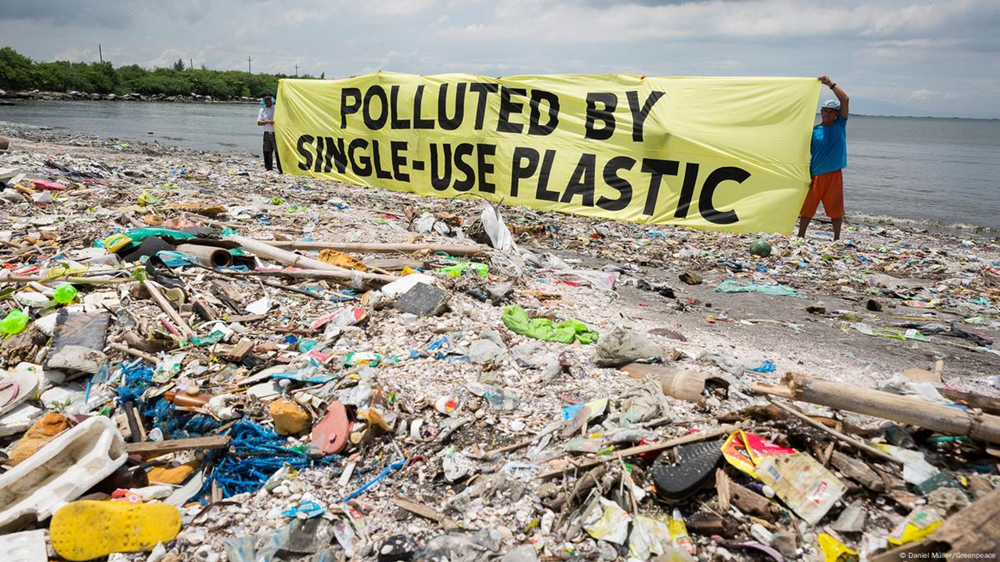
Companies use many ways to deceive us. For example a cosmetics company organizing beach clean-ups to promote their environmental efforts, while ignoring the fact that much of the plastic waste on those beaches comes from their own products. They distract us with small actions, all while contributing to larger environmental problems they fail to address.
Chemicals entering our bodies
How many cosmetic products do you apply to your skin each day? According to a 2004 study by the Environmental Working Group, women use about 12 beauty products daily, while men use around 6. (3) According to a study in 2008, teenagers use around 17 products a day. (4) Now, it is most likely more.

Source: pixabay.com
A 2009 study in the UK found that the average woman’s beauty routine involves applying 515 different chemicals to her body every day! (5) While not all of these chemicals are harmful, several have been linked to serious health issues such as cancer, hormonal disruption, fertility problems, and allergies.
What’s even more concerning is that the majority of these chemicals have never been thoroughly tested for their long-term effects on the human body. Additionally, the combination of chemicals in products can create new, unknown effects—and these mixtures are rarely, if ever, tested.
Chemicals entering the environment
When we use cosmetic products, a portion of them ends up in the environment. When we rinse off face gel, spit out toothpaste, or swim after applying sunscreen, these products wash away into our water systems. Sunscreen, for example, is often rinsed off into the ocean, contributing to water pollution.
In 2015, Researchers set about to test the hypothesis that sunscreens are one of the causes of coral die-off. An estimated 14,000 tons of sunscreen is believed to be deposited in oceans annually with the greatest damage found in popular reef areas in Hawaii and the Caribbean. (6)
“At the end of the day, when the tourists had left and the water had calmed, you could see the sunscreen sheen on the surface of the water”. (7)

Source: unsplash.com
The researchers would find that oxybenzone and other chemicals common to sunscreens kill coral larvae. Without those larvae, coral colonies cannot replicate and will eventually die off.
More than 500 million people rely on coral reefs for the protection against coastal damage from waves, the fisheries resources they offer and the tourism they help attract. Many affected coral reefs that exhibited 70–80% live coral cover in the 1970s, presently exhibit less than 5–10%. According to an international group of scientific experts, coral reefs could be almost extinct in 30 to 50 years, under the worst-case scenario. (8)
Once we’re done with our cosmetic products, their journey doesn’t end. What happens to it and what about all the packaging?
Waste from packaging
Most cosmetic packaging is made of plastic. In 2020, the EU generated 15.5 million tonnes of plastic waste, but only 38% was recycled. (9) The rest likely found its way into incinerators, landfills or even the environment. For example, researchers in Australia found that cotton swabs alone make up 60% of sanitary waste on beaches. On just one beach, volunteers collected over 18,000 swabs. (10)
David Kumordzi is a composer and musician based in Ghana’s capital Accra. He spends a lot of his time mobilising people to clean up his country’s beaches. The waste Kumordzi and his team collect includes plastics and discarded clothing.
“Most of the waste is coming from Europe because we are connected to the Atlantic Ocean. Most of the waste we are seeing around our beaches is not from Ghana.”
He blamed Europe for the tons of waste constantly being washed ashore. (11)

Source: unsplash.com
Chemicals in wastewater treatment plants (WWTPs)
The chemicals in our everyday cosmetics don’t just affect us—they also impact aquatic ecosystems. Many chemicals from wastewater treatment plants (WWTPs) are released back into the environment because these facilities aren’t designed to filter out certain harmful substances, such as phthalates and PFAS. In fact, under normal conditions, WWTPs can only remove about 18% of phthalates, while chemicals like PFAS are almost impossible to eliminate and are coming directly back to us. (12)
These chemicals, often recognized as endocrine disruptors, are particularly harmful to fish. Studies show that exposure to endocrine-disrupting chemicals leads to abnormal development in fish gonads, reducing their ability to reproduce. This can lead to declining fish populations, which disrupts aquatic ecosystems and food chains. (13)
Microplastics
Microplastics are man-made solid polymers that are usually no bigger than 5mm. It is estimated that overall around 145,000 tonnes of microplastics are used yearly in the EU/EEA. (14)

Source: pixabay.com
In cosmetic products, microplastics are most commonly found in face and body scrubs and toothpastes. When we use these products, some of the microplastics enter our body, the rest is rinsed off, meaning the particles flow down the drain. Unfortunately, most wastewater treatment plants are not designed to filter out microplastics, allowing them to flow into rivers and oceans. Once there, marine life swallows or absorbs these particles, and when we eat seafood, we ingest them too. Because of microplastics’ “sponge-like” properties, they act as carriers of toxic chemicals into our bodies.
It has been estimated that the average person can ingest up to 5 grams of microplastic a week. Some of the microplastics pass seamlessly through the digestive system and are expelled in faeces, some microplastics are accumulated within bodily organs, and recent research has shown that some pieces cross cell membranes and enter the bloodstream. (15)
When it comes to buying beauty products, be cautious and mindful – prevent filling up your shelves with many unnecessary products and rather focus on a few, trusted pieces for a minimal skincare routine. Check the producer and the ingredients, in many cases the less ingredients the better. Remember, your choice is giving the producers a message, if you care what is in the product and how the company is treating people and the environment in their supply-chain, they will have to start caring too!
Sources
[1] https://www.cbi.eu/market-information/natural-ingredients-cosmetics/what-demand
[2] https://environment.ec.europa.eu/topics/circular-economy/green-claims_en
[3] https://www.theguardian.com/us-news/2019/may/23/are-chemicals-in-beauty-products-making-us-ill
[4] https://www.ewg.org/research/teen-girls-body-burden-hormone-altering-cosmetics-chemicals
[5] https://www.reuters.com/article/us-britain-cosmetics-idUSTRE5AI3M820091119/
[6] https://www.nytimes.com/2018/05/03/travel/hawaii-sunscreen-ban.html
[8] https://www.hawaii.edu/news/2021/06/04/coral-reef-survival/
[9] https://ec.europa.eu/eurostat/web/products-eurostat-news/-/ddn-20221020-1
[10] https://www.cleanocean.org/cotton-bud-survey.html
[11] https://www.dw.com/en/activists-slam-europe-for-dumping-on-africa/a-61315412
[12] https://www.mdpi.com/1420-3049/26/22/6966
[13] https://www.sciencedirect.com/science/article/pii/S0013935121013359

0 Comments