
“Toxics in, toxics out” – a phrase from Annie Lennox’s famous Story of Cosmetics (1) video – highlights the reality of the beauty industry. But I’d take it further: “Toxics in, toxics out, toxics in.” It’s a cycle. The stuff that we release into the environment often comes back to us. This cycle endangers not only the environment but also our health. Let’s dive into this toxic loop by exploring some specific stories from the life-cycle of cosmetics.
It all starts with the sourcing of ingredients. Key components of cosmetics, such as plant extracts or oils, often come from large-scale farming or extraction.
Mineral oil
Did you know that mineral oil, a petroleum derivative like gasoline, is a common ingredient in many cosmetic products? From face creams to foundations, it’s found in a surprising range of items.
The extraction of petroleum, from which mineral oil is derived, is notorious for its environmental risks. Oil drilling is linked to habitat destruction, pollution, and significant threats to ecosystems. The oil industry is also associated with war, displacement, and political instability in several regions of the world. (2)

Source: pixabay.com
Almost every day, Udengs Eradiri is informed of another oil spill in Bayelsa state, in the Niger Delta. “You just need to take a tour to understand the magnitude of the environmental abuse,” he adds. Approximately 40 million litres of oil are spilled annually throughout the Niger Delta, polluting the air, land, and water. Out of Bayelsa’s roughly 2 million residents, around 75% depend on fishing or farming for their livelihoods.“Those communities are getting involved in other ways of surviving. And that’s why there’s been a lot of upsurge in criminal activities as well as artisan refining, all to survive.” (3)
Palm oil
Palm oil is found in about 50% of supermarket products, including items like chocolate, pizza, shampoos, deodorants, and lipsticks. The massive demand for palm oil has devastating environmental consequences. Around 300 football fields of forest are cleared every hour globally to make way for palm plantations. This deforestation destroys habitats and threatens critically endangered species like orangutans, Sumatran tigers, and rhinoceroses. (4)
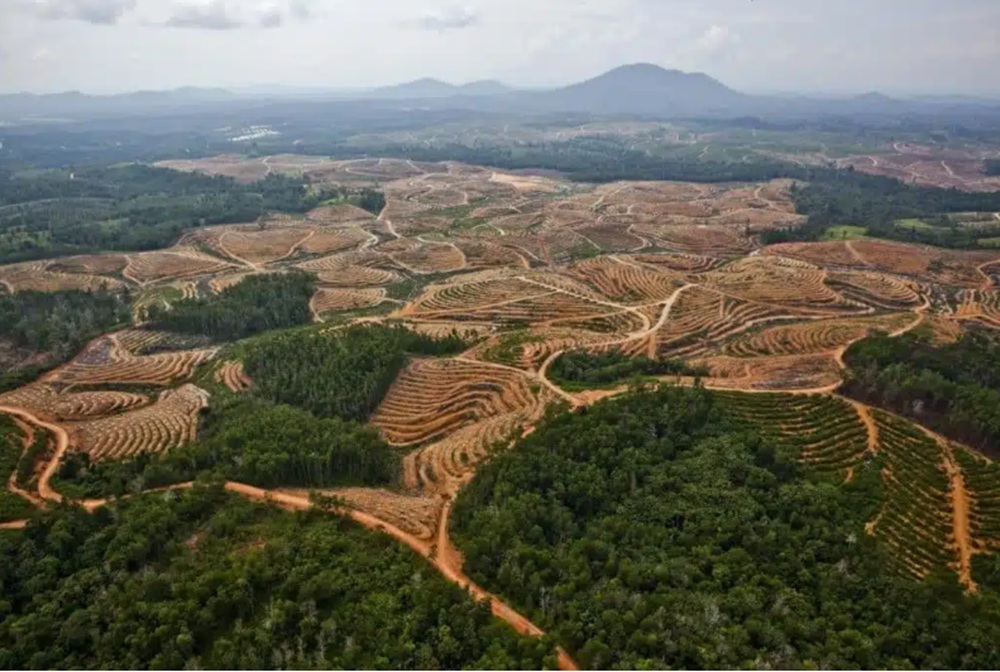
Source: Greenpeace
It also impacts local communities and their way of living: “When we lost the forest, we lost everything. Before, our lives were simple, not rich, but enough. Since oil palm came, there is more suffering. I can’t feed my family.” —Leni, May 2018 (5)
Mica
In make-up, such as eye shadows, face powders, lipsticks or body glosses, one of the main ingredients is mica – this is what makes all these products so shiny. Mica is a mineral and has to be mined, mainly in Madagascar and India. Both of these countries are associated with the use of child labour in mica mines.
“Felicia is a 13-year-old girl who works in a sorting company in Amboasary. She lives with her mother and eight siblings. She explained that she has never attended school. In the sorting company where she works, she does all the sorting tasks adult workers engage in as well. Like the other children in the group, she is not in good health; she coughs a lot and talks about her deplorable nutritional situation. Very often, she leaves early to work at the company on an empty stomach and can only eat at night if she can find something to eat. As she does not go to school, she works from Monday to Sunday, without a rest, from 7 a.m. to 3 p.m. Felicia is conscious of the harsh reality of her life and is aware of the fact that things may never improve for her.” (6)
After resource extraction, the problems unfortunately continue in the production processes. As I said: “Toxics in, toxics out, toxics in.”
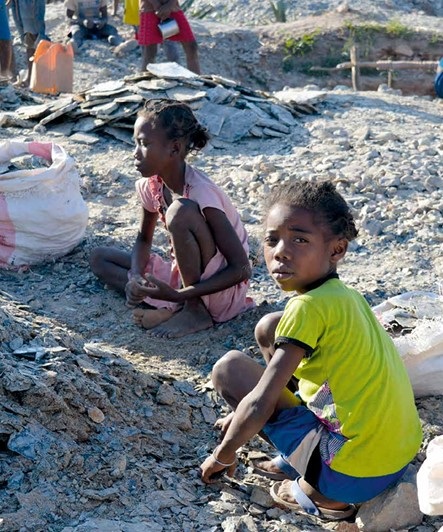
Source: https://www.datocms-assets.com/22233/1623490704-child-labour-in-madagascars-mica-sector-terre-des-hommes.pdf
Harmful ingredients used in cosmetics formulation
Europe’s beauty market is the largest in the world, valued at an incredible €96 billion. (7) But behind this booming industry lies a complex regulatory landscape that raises concerns about product safety and the ingredients used.
According to EU regulations, companies themselves are responsible for ensuring that their beauty products are safe and comply with the Cosmetics Regulation (8) – there’s no external control. Even though ingredients are continuously reviewed, the process is slow and complicated. Many ingredients have been linked to serious health issues, including cancer, hormonal disruptions, fertility problems, and allergies but to really prove it and ban the ingredients is a very difficult task.
Luckily in Europe, we have many NGOs and agencies fighting for human safety and one key difference between Europe and other regions, like the U.S., is the number of banned substances. The EU has prohibited or restricted 1,641 chemicals from cosmetics, while the U.S. FDA has banned only 11. (9)
In some cases, producers unknowingly use harmful chemicals. However, there are cases where companies are aware of the risks but fail to act. A well-known example is Johnson & Johnson’s baby powder case from 2018. The company was sued by 22 women who claimed they developed ovarian cancer from using their baby powder, which was contaminated with asbestos. Despite J&J’s insistence that their product was safe, internal documents later revealed that they were aware of the contamination and withheld the information from the public. (10)
Water
Water is Earth’s most precious resource. With only 0.26% of global freshwater available for human use, and 4 billion people already experiencing water scarcity, the planet’s water supply is under immense pressure. (11)
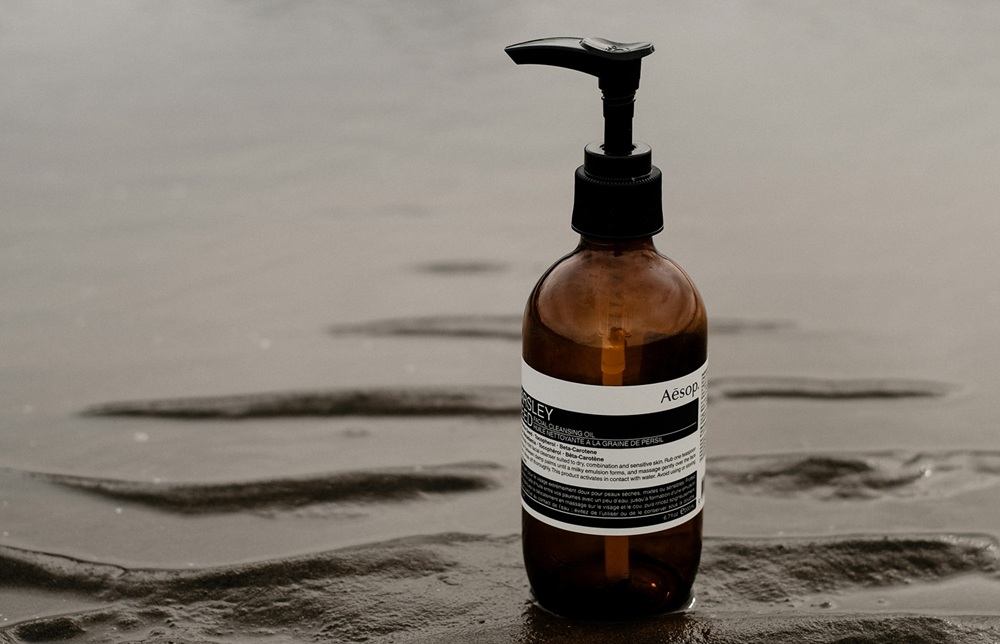
Water is essential in both cosmetic formulations and manufacturing, with products like creams containing 60-80% water and shampoos up to 95%. (12) Beyond formulation, water is used throughout production—producing and processing ingredients, cleaning, packaging—and this “embedded” water can reach thousands of liters.
Source: unsplash.com
Throughout the manufacturing process, some of the used water, which may be contaminated, is released back into the environment. For instance, wastewater runoff from agricultural fields, along with fertilisers and pesticides can be carried into surface or groundwater. Certain cosmetic ingredients utilised during formulation are known contributors to water pollution. Surfactants, for example, are found in a wide variety of cosmetics and are regularly released into both aquatic and terrestrial ecosystems. (11)
Testing on animals
“More than 100 million animals suffer and die in the U.S. every year in cruel chemical, drug, food, and cosmetics tests. Examples of animal tests include forcing mice and rats to inhale toxic fumes, force-feeding dogs pesticides, and applying corrosive chemicals into rabbits’ sensitive eyes.” (13) Some states in the U.S., like California, already prohibited animal testing but in many countries around the world it is still allowed or even required.
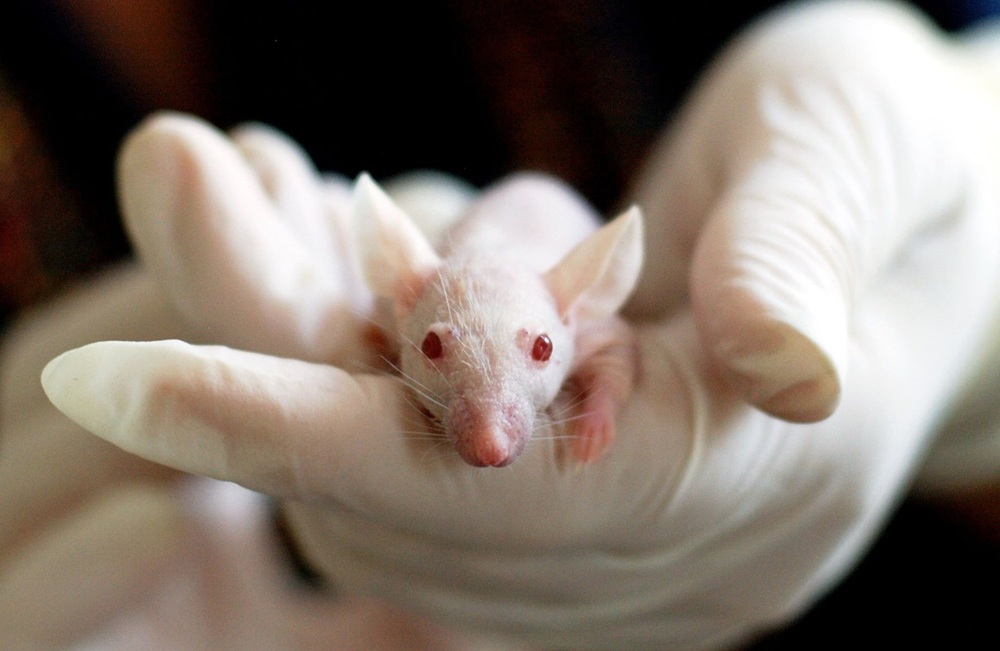
Source: pixabay.com
The European Union has banned the sale of cosmetics tested on animals, sending a clear message: ”No animal deserves to suffer and be killed for the sake of lipstick or toothpaste.” (14) However, the ban in the EU is not 100% effective. There are some exceptions under which testing on animals is still allowed. Also, it doesn’t mean that the product was not tested on animals before the ban came into force.
Are you interested to know what happens during consumption and disposal? Then continue to read Part 2. 🙂
Sources
[1] https://www.youtube.com/watch?v=pfq000AF1i8
[2] https://journals.sagepub.com/doi/full/10.1177/19427786221084281
[4] https://earth.org/how-palm-oil-contributes-to-environmental-destruction/
[7] https://www.ctpa.org.uk/eu-and-worldwide
[8] https://eur-lex.europa.eu/legal-content/EN/ALL/?uri=celex%3A32009R1223
[9] https://www.fda.gov/cosmetics/cosmetics-laws-regulations/prohibited-restricted-ingredients-cosmetics
[10] https://www.reuters.com/investigates/special-report/johnsonandjohnson-cancer/
[11] https://www.sciencedirect.com/science/article/pii/S235255092200094X
[12] https://www.cosmeticsbusiness.com/news/article_page/Blue_gold_Water_in_cosmetics/156328
[13] https://www.peta.org/issues/animals-used-for-experimentation/
[14] https://www.peta.org/blog/european-union-cosmetics-testing-ban-reach-loophole/

0 Comments