
All wanna smell awesome, right? That perfect spritz before a night out, or the trusty deodorant keeping us fresh when life gets hectic. Scents are totally a vibe, but have you ever paused to think about what’s really in those bottles? And what if you could smell amazing while being kinder to your body and the planet? Let’s dive deep into the natural side of feeling fresh!
The Scent Scene: What’s Hiding in Your Fave Sprays?
For ages, the perfume industry has been whipping up those captivating scents we all know using synthetic chemicals. Yeah, they smell great and last forever, but people are starting to ask questions (and worry) about what these chemicals might be doing.
Loads of mainstream perfumes and deodorants pack ingredients like phthalates (they help the scent stick around) and parabens (preservatives).
One phthalate that may be used in perfumes is diethyl phthalate, or DEP, which can serve as a solvent or fragrance fixative. However, laboratory studies have also detected dibutyl phthalate, or DBP, and bis(2-ethylhexyl) phthalate, or DEHP, in some perfumes sold on the market, even though these phthalates are banned in cosmetics in the EU. They may enter the product through illegal use, contamination during manufacturing, or migration from the packaging [1].
Not all parabens are the same either. Methylparaben and ethylparaben are considered safe at permitted concentrations. More attention is paid to propylparaben and butylparaben because of concerns about their possible hormonal activity. They are still permitted in cosmetics, but their concentrations are restricted. The SCCS considers them safe when used as preservatives up to a maximum concentration of 0.14% [2, 3].
Some studies are kinda hinting at links between these chemicals and health stuff, but it’s a super complex area, and research is still on the go. Places like the Environmental Working Group (EWG) have spilled the tea on concerns about chemicals in personal care stuff, including fragrances [4]. Seriously, check out their “Skin Deep” database if you wanna get nerdy on ingredients.
Plus, when a label just says “fragrance” or “parfum,” that’s usually a secret blend of dozens of chemicals. Kinda sketchy when you just wanna know what you’re actually putting on your skin, right?
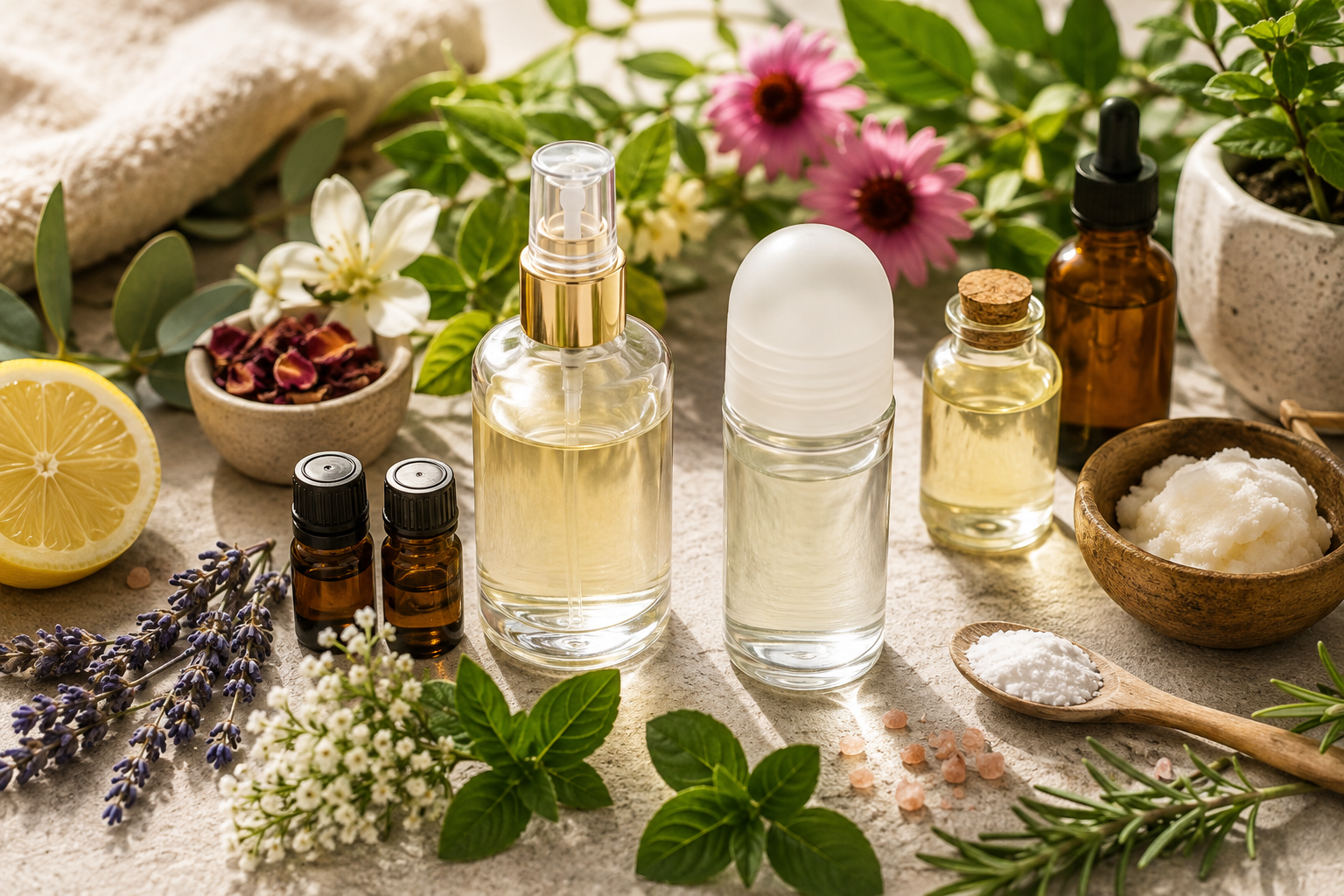
Source: AI-generated (ChatGPT, OpenAI)
EU Regs & Your Scents: What ECHA’s Doing 🇪🇺
Okay, real talk for our European fam and anyone who cares about proper rules: The European Chemicals Agency (ECHA) is basically the big boss for chemical safety in the EU. They’ve got this thing called REACH Regulation, which makes companies tell ECHA everything about the chemicals they make or bring into the EU. It’s all about checking for risks [5].
So, if a chemical is super sus (“of very high concern”), ECHA might restrict it or make it get special approval. They also run the CLP Regulation which makes sure chemical hazards are labeled clearly, so you know what’s up [6].
Ever notice those super long lists of ingredients on the back of your perfume? That’s partly because of regulations that require specific fragrance allergens to be listed if they’re over a certain amount [7].
The most important European legislation concerning cosmetics is Regulation (EC) No 1223/2009 on cosmetic products. It sets requirements for product safety, mandatory safety assessment before a product is placed on the market, labelling, lists of prohibited and restricted substances, and the responsibility of the manufacturer or another responsible person. Every cosmetic product sold in the EU must be safe for human health when used under normal or reasonably foreseeable conditions [8].
Scientific opinions on the safety of selected cosmetic ingredients are prepared by the independent Scientific Committee on Consumer Safety, or SCCS. It assesses available scientific studies, possible health effects, the concentration of the substance, and the way it is used. Based on its conclusions, the European Commission may permit, restrict, or prohibit the use of a particular substance. However, the SCCS does not approve individual cosmetic products or assess every perfume or deodorant separately [9].
ECHA keeps a close eye on everything in cosmetics to make sure it’s safe for us and the planet [10]. So, yeah, there are rules, but it still helps to know what you’re buying.
Why Go Natural? Level Up Your Scent Game!
This is where things get cool! Going natural with your perfumes and deodorants means embracing ingredients straight from nature – essential oils, plant extracts, mineral salts. It’s like bringing the outside in, but smelling way better.
1. Good Vibes for Your Body:
Less Sketchy Stuff: Obvious win! Ditching synthetic compounds means way less exposure to things that could irritate your skin or have unknown long-term effects.
Skin Love: Natural ingredients like aloe vera, coconut oil, and shea butter are total skin healers. They’re super gentle, even for sensitive skin. Plus, essential oils (when mixed right!) can actually have therapeutic benefits.
However, be aware that also natural ingredients have their impact on the environment and our health.
2. Eco-Friendly Flex:
Biodegradable Bliss: Natural ingredients break down easier in nature. Less junk lingering in the environment. Win-win!
Ethical Sourcing: A lot of natural fragrance brands are all about fair trade and sustainable farming. So you’re smelling good and doing good.
3. Unique & Real Scents:
Your Personal Vibe: Natural fragrances, especially those with essential oils, aren’t just one-note wonders. They vibe with your body chemistry, creating a scent that’s uniquely you. No two people will smell exactly the same!
Therapy in a Bottle: Beyond just smelling fine, many essential oils have legit aromatherapy powers. Lavender for chilling, peppermint for a pick-me-up, citrus for good moods – your fragrance can totally be a mini wellness hack! [11]
Making the Switch: Gen Z Edition! ⚡
Ready to upgrade your scent game? Here’s the lowdown:
Baby Steps: You don’t have to throw everything out. Start with a natural deodorant, or grab a small roll-on of an essential oil blend. See how you feel!
Read the Receipts (Labels!): Look for “100% natural,” “essential oils,” and “plant-derived.” If it says “fragrance” and nothing else, or “natural identicals,” be a little skeptical. Also, peep those specific allergen lists – they’re there for a reason!
Test it Out: Always do a tiny patch test on your skin before slathering any new product, especially if it has essential oils. Safety first!
DIY Fun (But Be Smart!): Feeling crafty? Making your own deodorant or essential oil roll-ons can be super empowering. BUT, seriously, Google proper dilution ratios for essential oils. Don’t go wild and irritate your skin! [12] Rather check-out our blogs and videos on DIY.
Support the Good Guys: Tons of smaller brands are crushing it in the natural and sustainable fragrance world. A quick search for “natural perfume brands” or “eco-friendly deodorants” will hook you up with some amazing options.
The TL;DR
Choosing natural fragrances isn’t just a trend; it’s a conscious choice for your well-being and for Mother Earth.
Gen Z, you’re already trailblazers when it comes to being mindful consumers, and educators/youth workers, you’re the OGs guiding these conversations. So, next time you’re reaching for a scent, let nature lead the way. Your body (and the planet) will thank you big time!
Got any natural fragrance faves or DIY hacks? Drop ’em in the comments below! 👇
Sources
[1] Aldegunde-Louzao, N. et al. (2024). Phthalate Esters in Different Types of Cosmetic Products.
https://pmc.ncbi.nlm.nih.gov/articles/PMC11510284/
[2] Scientific Committee on Consumer Safety (SCCS). Opinion on Propylparaben, SCCS/1623/20.
https://health.ec.europa.eu/system/files/2022-08/sccs_o_243.pdf
[3] Scientific Committee on Consumer Safety (SCCS). Opinion on Butylparaben, SCCS/1651/23.
https://health.ec.europa.eu/publications/butylparaben-cas-no-94-26-8-ec-no-202-318-7_en
[4] Environmental Working Group (EWG). (n.d.). Skin Deep Cosmetics Database.
https://www.ewg.org/skindeep/
(Note: Users should search the database for specific ingredients and their ratings.)
[5] European Chemicals Agency (ECHA). (n.d.). REACH Regulation.
https://echa.europa.eu/regulations/reach
(General information on REACH.)
[6] European Chemicals Agency (ECHA). (n.d.). CLP Regulation.
https://echa.europa.eu/regulations/clp
(General information on CLP.)
[7] EcoMundo. (2023, December 10). New EU Fragrance Allergen Labeling Rules Explained.
https://ecomundo.eu/en/blog/new-eu-fragrance-allergen-labeling-rules-explained
[8] European Parliament and Council. Regulation (EC) No 1223/2009 on cosmetic products.
https://eur-lex.europa.eu/eli/reg/2009/1223
[9] European Commission. Scientific Committee on Consumer Safety (SCCS).
https://health.ec.europa.eu/scientific-committees/scientific-committee-consumer-safety-sccs_en
[10] CosmeticsBusiness. (2025, March 27). Full list of substances used in cosmetics and personal care to be tested for health risks by ECHA revealed.
https://cosmeticsbusiness.com/echa-corap-substance-testing-health-environment-risks
[11] Price, S., & Price, L. (2012). Aromatherapy for Health Professionals. Churchill Livingstone.
[12] Tisserand, R., & Young, R. (2014). Essential Oil Safety: A Guide for Health Care Professionals. Churchill Livingstone Elsevier. https://www.sciencedirect.com/book/monograph/9780443062414/essential-oil-safety

0 Comments