
Henna has been the ultimate “natural” accessory for centuries—from festival body art to sustainable hair glow-ups. As our generation shifts toward clean beauty and conscious consumption, henna seems like the perfect choice. But is it always as green as it looks? Let’s break down why your “natural” tattoo might be a chemical cocktail and how to keep your skin and the planet safe.
1. The Health Vibe Check: Natural vs. “Black Henna”
Real henna (from the Lawsonia inermis plant) is a GO. It’s been used for ages, it’s biodegradable, and it gives you that classic reddish-brown stain. The problem? It takes time to develop.
Because many people want “instant results” or a darker look, the industry created “Black Henna.” This isn’t actually henna—it’s often a mix of low-quality plant powder and a heavy-duty chemical called p-Phenylenediamine (PPD) [1].
- The Risk: PPD is a powerful allergen. The European Chemicals Agency (ECHA) warns that it can cause severe skin sensitization.
- The Reaction: We’re talking chemical burns, permanent scarring, and lifelong allergies to things like hair dye or even some materials [2].
- Youth Worker Tip: If you’re organizing a summer camp or festival, never allow “black henna” booths. A tattoo done in fifteen minutes? It’s definitely worth checking the full list of ingredients.
2. Planet Impact: Is Your Glow-Up Hurting the Earth?
We care about the planet, so we need to look past the “natural” label. The impact of henna depends on how it’s grown and processed.
- Soil Health & Monocultures: To keep up with TikTok trends and global demand, some farms use intensive monoculture. This strips the soil of nutrients and kills biodiversity. Without organic practices, synthetic pesticides can leak into groundwater, damaging local ecosystems for years.
- Toxic Runoff: When synthetic chemicals like PPD or heavy metals are added to henna hair dyes, they don’t just stay on your head. When you wash them out, these toxins enter the water system. ECHA classifies PPD as highly toxic to aquatic life, with long-lasting effects [1]. It may therefore pose a problem, although the actual risk depends on the amount used and other factors.
3. The Ethics: Fair Trade vs. Exploitation
Natural beauty should feel good for everyone, including the people growing it. Most henna comes from regions like Rajasthan, India.
- Labor Rights: The harvest is hard work. Ethical brands ensure fair wages and safe conditions. Unfortunately, in unregulated supply chains, child labor can still be a reality 😣.
- Fair Trade: Choosing Fair Trade certified henna means you’re supporting local communities and ensuring that the “natural” product in your hand didn’t come from exploitation 💚.
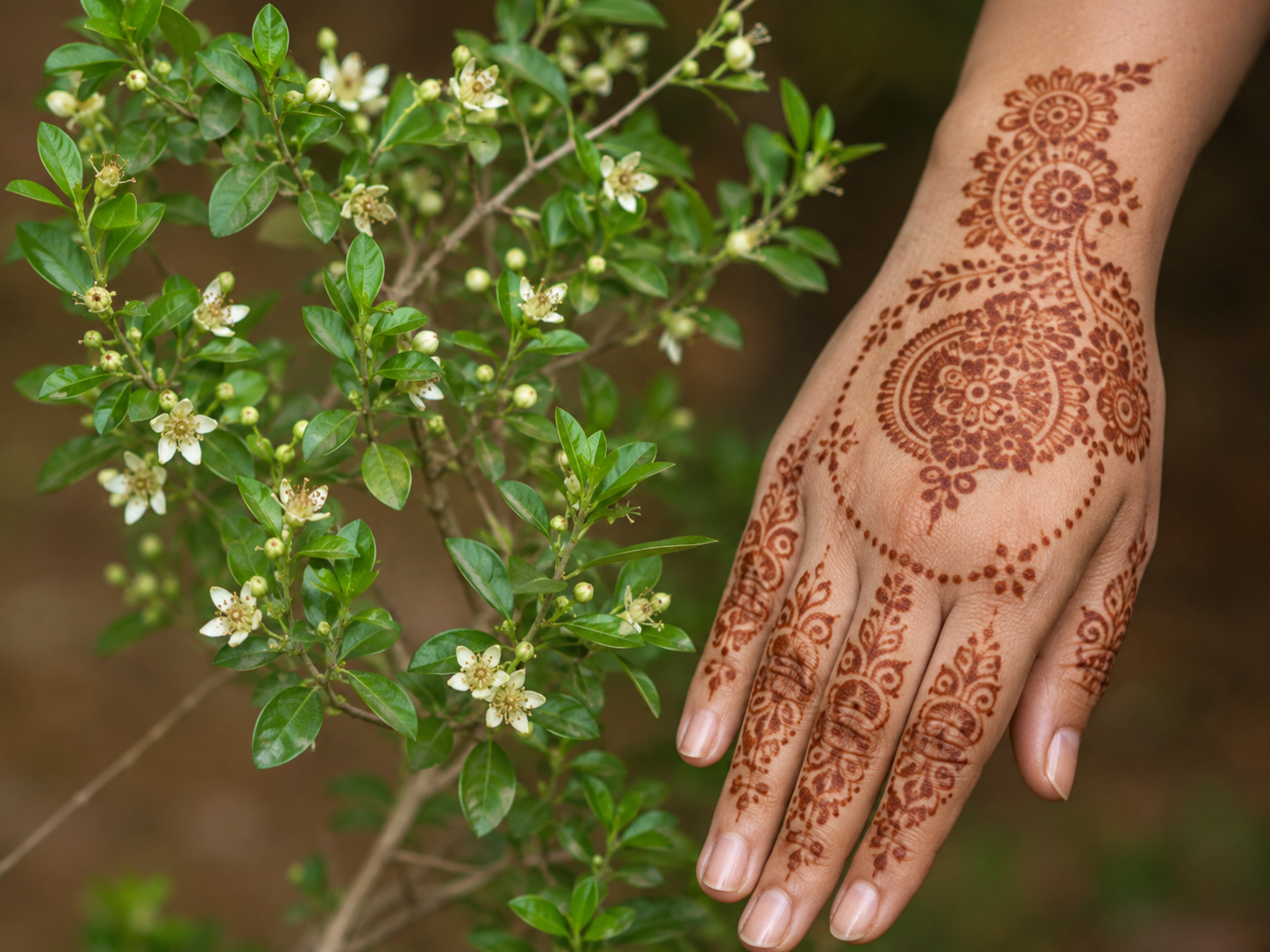
Source: AI-generated (ChatGPT, OpenAI)
4. How to Spot “Sus” Henna: A Pro-Consumer Checklist
Before you buy or apply, do this quick audit:
- Read the INCI (Ingredients): It should only say Lawsonia Inermis Powder 🌿 . If you see PPD, silver nitrate, or “coal tar”—RUN.
- The Color Test: Does it promise black, blue, or purple? That’s not henna. Real henna is always in the red-orange-brown spectrum❌.
- Check the Certs: Look for USDA Organic, COSMOS, or EU Organic logos. This confirms the soil was treated with respect.
- Smell it: Real henna smells like cut grass or hay🌿 . If it smells like chemicals or bleach, it’s fake.
- Packaging: Swap single-use plastic sachets for brands using glass, tin, or recycled paper.
Summary for Youth Leaders
When talking to young people about henna and tattoos:
- Educate, don’t just ban: Explain why black henna is dangerous (the PPD factor).
- Verify sources: Teach them to check ECHA’s “Tattoo Inks” info to understand what goes into their skin [3].
- Encourage Slow Beauty: Natural henna needs several hours to produce a more noticeable stain on the skin. Scientific literature recommends leaving it on for at least two hours, with longer contact resulting in a darker colour [4].
Personal experience with henna: why we choose to dye our hair at home
“From my own experience, I know that using henna at home is not particularly difficult, although it does require a little patience. Preparing the mixture for your hair is not rocket science, and the whole process can become an enjoyable self-care ritual.”
Bára
“I occasionally use henna on my hair. I only tried a henna tattoo once, but it is generally not really my thing. I mainly use henna to refresh my hair colour or as a hair mask. Afterwards, my hair feels stronger, shinier, coarser and thicker, which suits me because my hair is naturally very fine. However, this effect gradually washes out. I use henna around two to four times a year. I have also had my eyebrows tinted with henna by a beautician several times. The result was great and, surprisingly, lasted quite a long time.”
Žaneta
How to use henna on your hair
Step 1: Prepare the mixture
Mix the powder with water according to the specific instructions provided with the product. The mixture should have the consistency of thick yoghurt.
Step 2: Apply the henna
Apply the warm paste to clean, damp hair. Start at the roots and work your way towards the ends.
Step 3: Leave it on
Cover your hair with a shower cap and a towel to keep the mixture warm. Leave it on for 15 minutes to 2 hours [4].
Step 4: Rinse
Rinse your hair thoroughly using water only. It is sometimes recommended not to use shampoo for the following 24 to 48 hours, allowing the colour to develop fully.
This method applies to pure henna made from the plant Lawsonia inermis. For mixtures containing indigo, walnut shells or other plants, the water temperature, preparation method and processing time may vary.
GG tip: Switching to 100% natural henna may take more time than a twenty-minute session with conventional hair dye. However, the potential benefits for your health, hair strength and the environment may make it well worth the extra effort 🙂.
Sources
[1] European Chemicals Agency (ECHA), “Identity – p-phenylenediamine”, Link: https://chem.echa.europa.eu/100.003.096/identity
[2] European Chemicals Agency (ECHA), “Legislation Obligation: p-phenylenediamine”, Link: https://echa.europa.eu/legislation-obligation/-/obligations/100.020.482
[3] European Chemicals Agency (ECHA), “Tattoo inks and permanent make-up”, Link: https://echa.europa.eu/hot-topics/tattoo-inks
[4] Calogiuri, G. et al., „Hypersensitivity reactions due to black henna tattoos and their components: are the clinical pictures related to the immune pathomechanism?“, Clinical and Molecular Allergy, 2017. https://pmc.ncbi.nlm.nih.gov/articles/PMC5385600/

0 Comments