
Water, limestone, stalactites, paper, raw materials, production and environmental impact. These are topics that can be discussed beautifully at school, but they connect even better when you see them directly in the field.
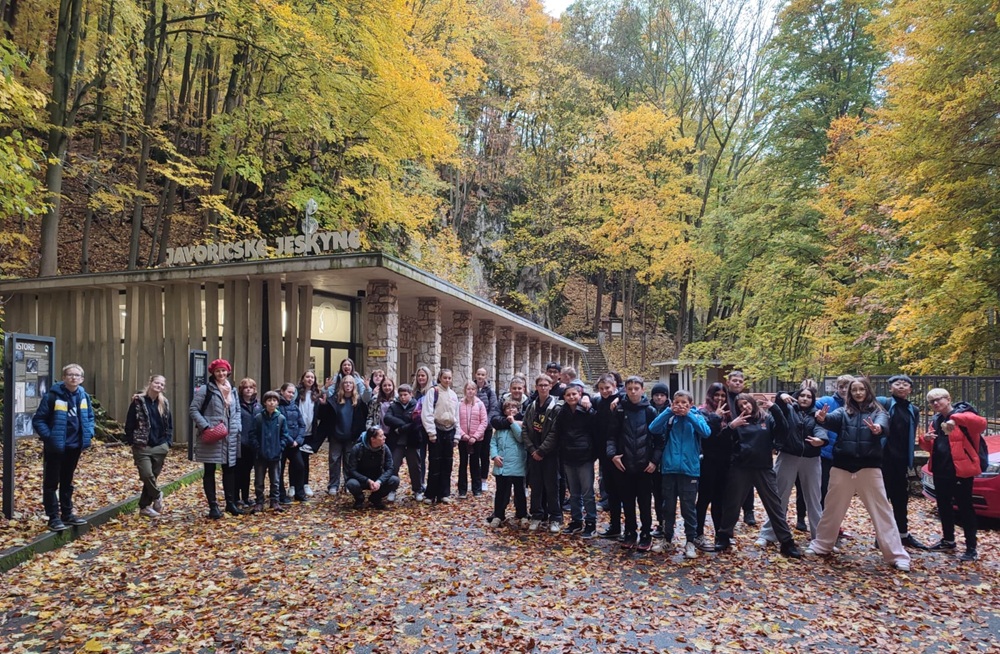
This time, GreenGate went with pupils from ZŠ Jindřichov, as part of their inquiry club, to the Javoříčko Caves and the Velké Losiny Handmade Paper Mill. We travelled by bus. The journey was not exactly crazy far, but at times it felt like we were moving at the speed of a horse-drawn cart. But never mind, we were happy to have the bus and the excursion mood could begin.
Source: GreenScan
The programme was divided into two groups so that the pupils could go through the cave calmly. For some of them, it was even the first stalactite cave they had ever seen. And honestly? Of course it is a hundred times better than any 5D cinema. The cold, the humidity, the silence, the stalactites and the underground spaces simply pull you in.
ZŠ Jindřichov also wrote about the excursion in their article Excursion of Lower Secondary Pupils: Javoříčko Caves and the Handmade Paper Mill in Velké Losiny.
Javoříčko Caves: water, limestone and time
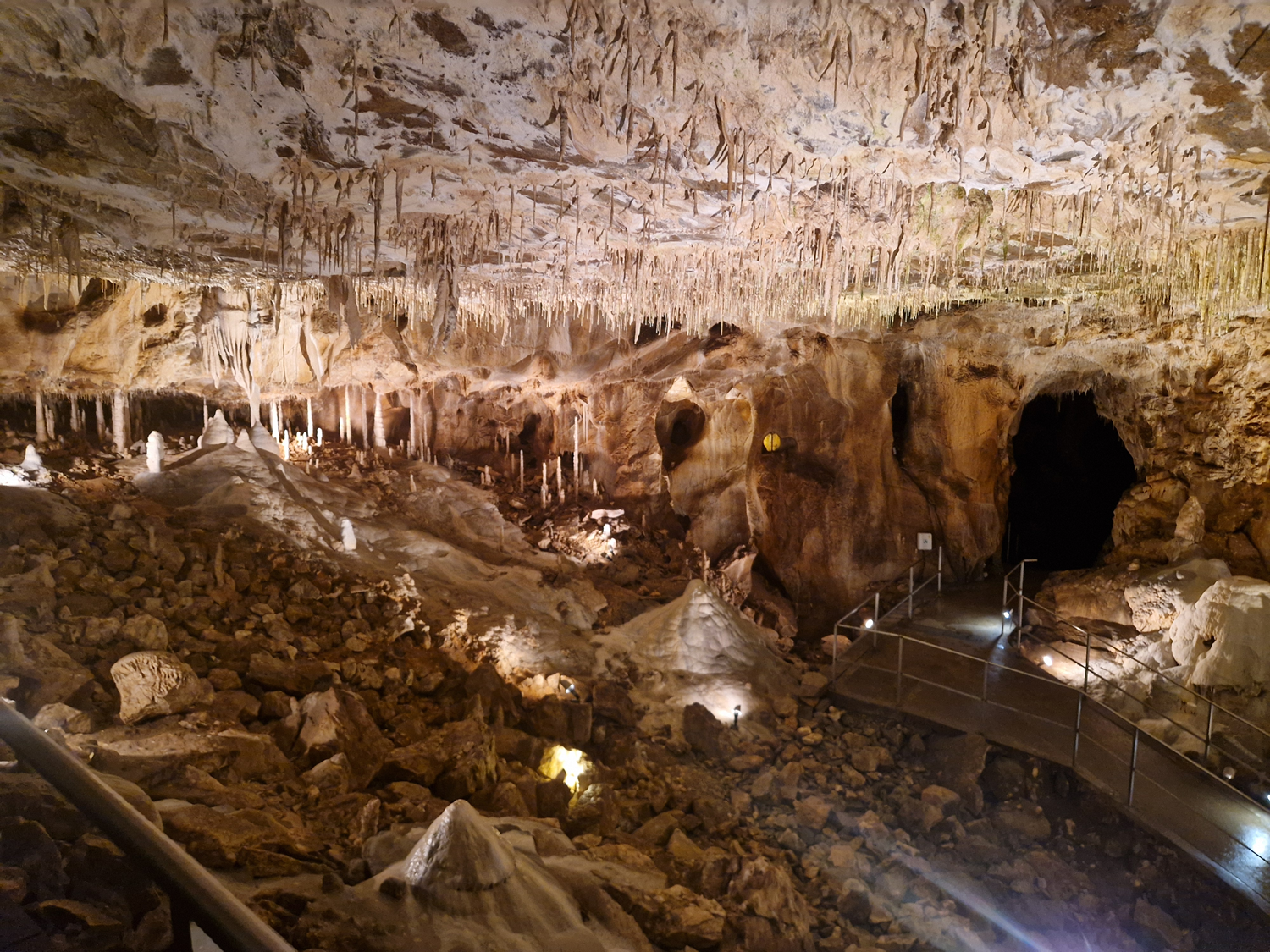
The Javoříčko Caves are a beautiful example of what nature can do when it has time. And by time, I really do not mean a few years. Here, water slowly seeps through the rock, dissolves limestone, carries mineral substances and deposits them again. Drop by drop. Year after year. The result is stalactites, domes, corridors and underground spaces.
According to the Cave Administration of the Czech Republic, the Javoříčko Caves form a complex system of corridors, domes and abysses in Devonian limestone. The Špraněk stream played a role in their formation, and a major part of the system was discovered as early as 1938. The caves have two visitor routes, 790 m and 360 m long. The temperature inside is around 7–8 °C all year round, with humidity around 99%. So yes, a hoodie is useful even in summer. More information can be found on the website of the Javoříčko Caves.
Source: GreenScan
In the cave, we mainly talked about water. Not only as something that flows from the tap, but as a force that can shape the landscape. When water seeps through soil and rocks, natural filtration takes place. At the same time, water carries different substances along the way. Some are natural, others may come from human activity. And this is exactly where we can nicely show that what we release into the environment does not just stay somewhere “out there”.
Stalactites are basically chemistry in practice. Water dissolves limestone, carries dissolved substances and, when conditions change, deposits them again. The calcium that forms these beautiful natural structures is also something we know from a completely different context. It is discussed in nutrition, food supplements, medicines, dental care and cosmetics. Calcium carbonate, for example, is used in some toothpastes as a mild abrasive ingredient or in cosmetics as a filler.
And that is exactly the point. In nature, it forms a stalactite. In industry, it is a material. In cosmetics, it is an ingredient. And in nutrition, it is something we associate with bones and teeth.
Beauty that should not be taken for granted
With caves, it is also good to remember that they are not just a nice place for a trip. They are fragile. Stalactite decoration forms extremely slowly, but it can be damaged very quickly. Touching, pollution or changes in the microclimate are enough.
We also talked about acid rain and air pollution. These are connected to combustion, industry, transport and emissions. And because limestone reacts with acids, changes in the chemistry of water or air can also affect rocks and karst environments.
So when we talk about a cave, we are not only talking about a cave. We are talking about water, air, landscape, human behaviour and the protection of something that has been forming for much longer than one human life.
Velké Losiny Handmade Paper Mill: paper with a story
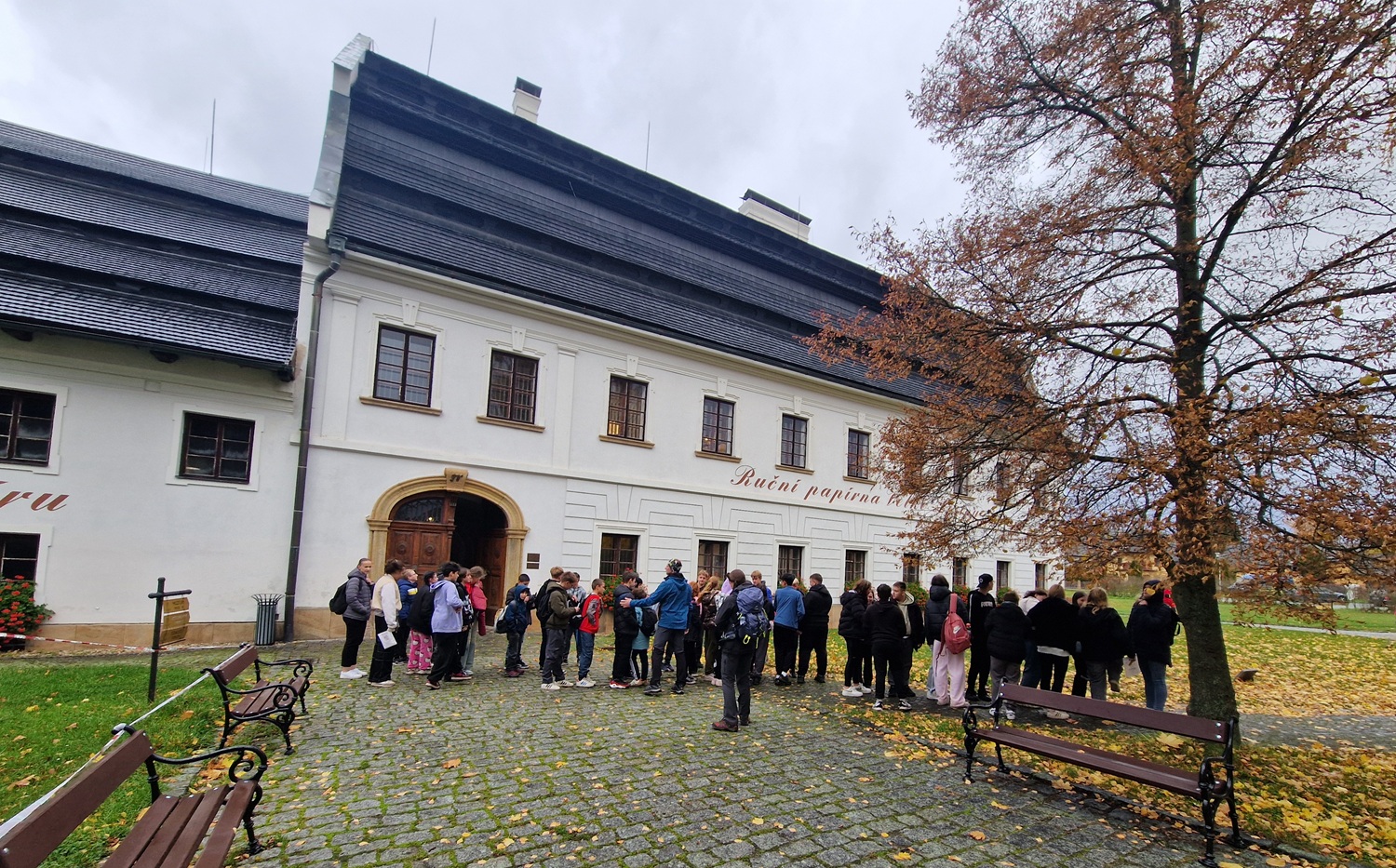
The second part of the excursion took us to the Velké Losiny Handmade Paper Mill. From the underground world and stalactites, we moved to fibres, moulds, pressing, drying and the tradition of paper production.
Source: GreenScan
The Velké Losiny Handmade Paper Mill has a history dating back to 1596. It is one of the oldest still operating handmade paper mills in Europe, and handmade paper is still produced there using traditional manufacturing methods, mainly from cotton and linen. More information can be found on the website of the Velké Losiny Handmade Paper Mill and in the section about the history of the paper mill.
And for me, this is honestly wow. Today, we take paper for granted. A notebook, a receipt, a box, packaging, cardboard from an online order. Just paper. But when you see handmade paper production, it suddenly becomes clear that behind it there is material, water, energy, work, time and craftsmanship.
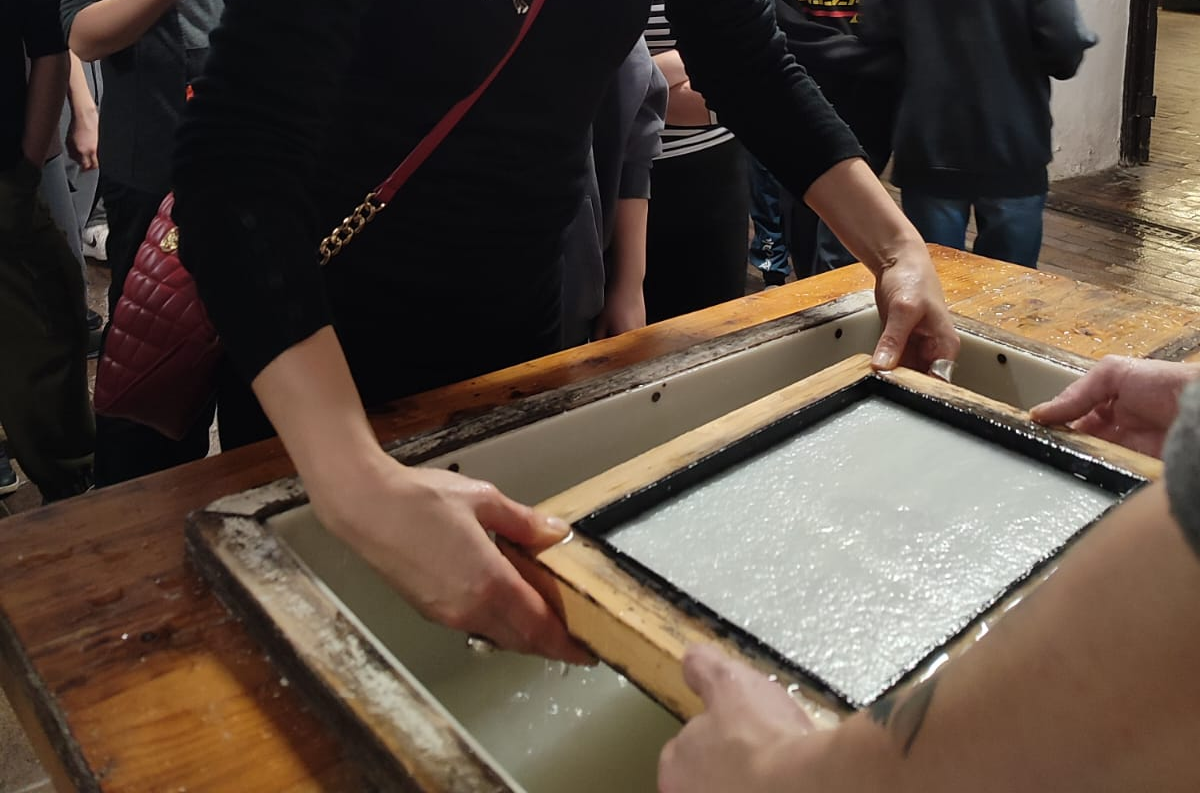
In the paper mill, we talked about how paper was made historically and how it is made today. Handmade paper is made more slowly, sheet by sheet, with an emphasis on fibre quality and processing. Commercial paper production is a completely different world. Fast, large-scale and technologically advanced.
And this opened up the topic of sustainability beautifully. Paper can be made from wood, but historically, linen and cotton fibres, textile rags and other fibre sources were also used. Today, recycled fibres, bamboo and other alternatives are being discussed. But no material is automatically holy. It always depends on where the raw material comes from, how it is produced, how much water and energy are used, how it is transported and what happens to the product afterwards.
Source: GreenScan
This is even more visible with packaging. Online shops, deliveries, boxes inside boxes, fillers, tapes, labels. Eurostat states that in 2023, paper and cardboard made up 40.4% of packaging waste in the EU. So yes, paper can often be a better choice than some plastics, but it is still a material that has to be produced, transported and processed. More information is provided by Eurostat.
So the question is not only “paper or plastic?”. The question is also: do we need this packaging at all? Is it unnecessarily large? Can it be reused? Can it be recycled? And could we simply package some things more cleverly?
From caves to paper
At first glance, the Javoříčko Caves and the Velké Losiny Handmade Paper Mill are two completely different worlds. One is a natural underground space, the other a historical manufactory. But together, they made a lot of sense.
In the cave, we saw how nature creates slowly and delicately. How water shapes rock and how long it takes for something unique to form. In the paper mill, we saw how people work with raw materials, water, fibres and craft. How a natural material becomes a product we use almost every day.
And this is exactly GreenGate. Showing connections. Not just saying “save water” or “sort paper”, but showing why. Where things come from, what stands behind their production and why it makes sense to think about how we use them.
Why it all makes sense
Excursions like this are not just trips. They are moments when school topics connect with reality. Water is not just H₂O. Limestone is not just a rock. Paper is not just a notebook or a box from an online order.
“It was really cold there, but beautiful.”
“The cave was better than I expected.”
“The bats and stalactites were the best.”
“I liked that it is an old place and they still make paper there.”
“I liked everything the most.”
The goal is not to turn everyone into speleologists, papermakers, chemists or ecologists. Although, who knows. The goal is to show that nature, production, consumption and waste are connected. That what we use every day has its origin and its impact. And that when young people see things with their own eyes, it is much easier for them to understand why it makes sense to think about them.

0 Comments