
If you’ve already used one, you probably know exactly what it looks like. And if you haven’t, chances are you’ve at least heard of it 😊, Konjac sponges have become increasingly popular in recent years.
They’re small, soft, and a bit like a squishy little bao bun, adorable and often called a miracle for your skin. But is that really the case? And what exactly is a Konjac sponge?
What Is a Konjac Sponge, Really?
Did you think Konjac sponges grow on bushes or come from the ocean? 🌿🌊 I used to believe they were a type of sea sponge swaying gently underwater or like loofahs, maybe, some kind of cucumber-like plant. Turns out, I couldn’t have been more wrong!
Konjac is actually a plant similar to potato for example. It’s a root vegetable! The sponge is made from the root of the Amorphophallus konjac plant – a vegetable native to parts of China, Japan, Korea, and Indonesia 🌏.
This is how the simplified process of making a konjac sponge looks like:
- Powdered konjac root is mixed with water.
- The mixture is whipped or stirred until it becomes a creamy “gum,” which is poured into sterilized molds.
- After setting, sponges are steamed at around 100 °C to fix shape and texture.
- They may be further dried or freeze‑dried, then quality‑tested before packaging.
The final product is a hard little block that becomes a soft, squishy sponge once soaked in water 🧽✨.
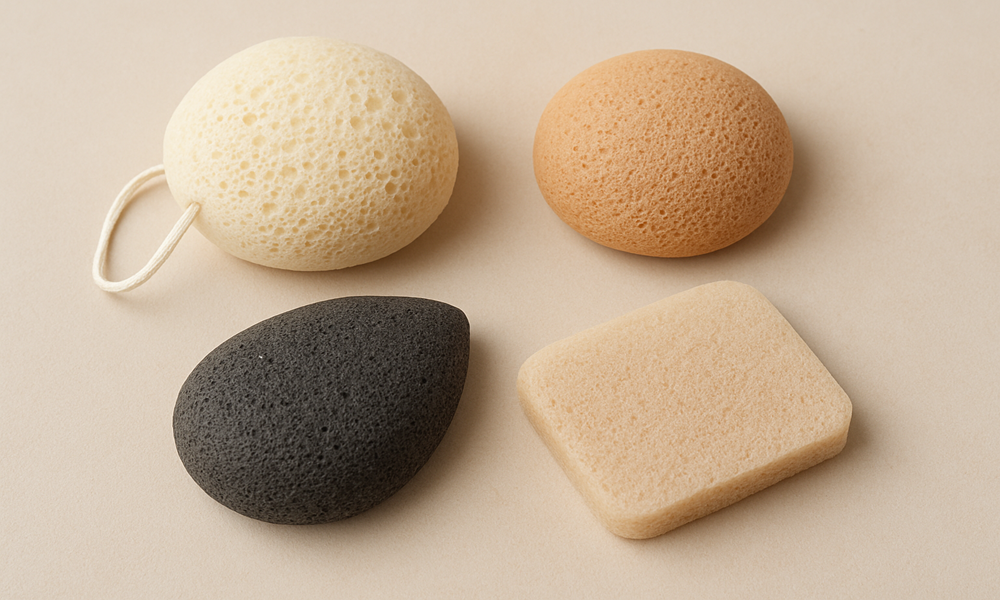
Source: Image generated using AI
Why Use a Konjac Sponge❓🧽
- Gentle, natural exfoliation & cleansing
When wet, konjac sponges gently remove dead skin, oil, and makeup, even around the eye area, without harsh scrubbing. Because of their soft texture, they’re suitable for most skin types except extremely sensitive ones.
- Vitamin‑rich and optionally infused
I was not able to find scientifically proven research on this but according to the producers the root naturally contains vitamins A, B, C, minerals like copper, zinc, iron, magnesium, and fatty acids – in small amounts carried through the sponge structure. Some sponges are infused with charcoal (for oil and acne), green tea, turmeric, camellia extract or clay to target different skin concerns. How much of all these vitamins and minerals really come through into our skin is questionable.
For me it seems like a great choice for our skin but what about for the planet?
Konjac sponges are generally seen as a more environmentally friendly alternative to synthetic sponges or plastic exfoliators, but their impact depends on a few key factors.
Here’s a breakdown of their environmental pros and cons:
🌱 Environmental Benefits
1. 100% Biodegradable
No plastic here! Konjac sponges are made from the root of a natural plant, meaning they’re biodegradable and compostable (unlike plastic sponges or nylon scrubbers). Once you’re done with them, you can toss them in your home compost, no landfill guilt required.
2. No Microplastics
Unlike some facial scrubs or synthetic exfoliators, konjac sponges don’t release microplastics into waterways. That’s a big win for oceans and aquatic ecosystems.
3. Minimal Processing (in most cases)
Production often involves just konjac flour, water, and a natural coagulant (like calcium hydroxide). Some sponges are infused with ingredients like charcoal or clay, but these are typically natural, too.
4. Low-Waste Packaging Options
Many brands now package konjac sponges in plastic-free, recyclable, or compostable boxes, aligning with zero-waste values.
⚠️ Potential Environmental Drawbacks
1. Transportation Footprint
The konjac plant is native to Asia, and most sponges are still produced in Japan, China, or South Korea. That means a carbon footprint is associated with shipping them internationally.
2. Agricultural Impact
Konjac generally needs few chemicals and can be grown with minimal pesticides and herbicides.Though konjac farming is relatively low-impact, large-scale monoculture farming of any crop can potentially contribute to biodiversity loss or soil degradation, though this isn’t a widespread concern for konjac yet.
🌟 Result
If you’re switching from plastic scrubbers or synthetic sponges, konjac sponges are a significantly more sustainable choice, especially when:
- You compost them after use,
- Buy from brands with ethical sourcing,
- Choose minimal packaging, and
- Combine them with low-impact routines (like using less water or skipping bottled cleansers).
They’re not perfect, but in the world of skincare, they’re one of the more earth-conscious exfoliation tools you can use. I really like to use one, because of how it feels and because it’s from natural, not plastic fibers – for me the most important point. And I really do put it into the compost after using 🙂
🔧 So, convinced?…Here is How to Use One
Use morning and/or evening:
- Soak it in warm water and wait until it’s fully soft.
- Squeeze gently to remove excess water but don’t wring it, that can damage the sponge.
- When desired, add cleansing product but this is not necessary with a konjac sponge
- Massage in light circular strokes.
- Rinse the sponge thoroughly after use and allow to air‑dry in a cool, ventilated place
- Replace every 4 – 12 weeks, some sources say monthly, others say up to three months depending on use.
Using it every day is fine, even twice daily for many people. Test it first and see what works best for you.
To extend the life of your Konjac Sponge, take proper care of it. Avoid leaving it in the shower or sitting in water, as this will reduce its lifespan.When dry, the sponge will shrink and harden – this is completely normal. Simply let it soak in water to soften before each use. Do not use the sponge while it’s dry.
I use it gently and it lasts me about 2-3 months, if yours doesn’t last so long, I recommend trying a different brand.
Konjac sponges are fully compostable and can also be reused in the garden to help retain moisture for plants. 🌿

0 Comments