
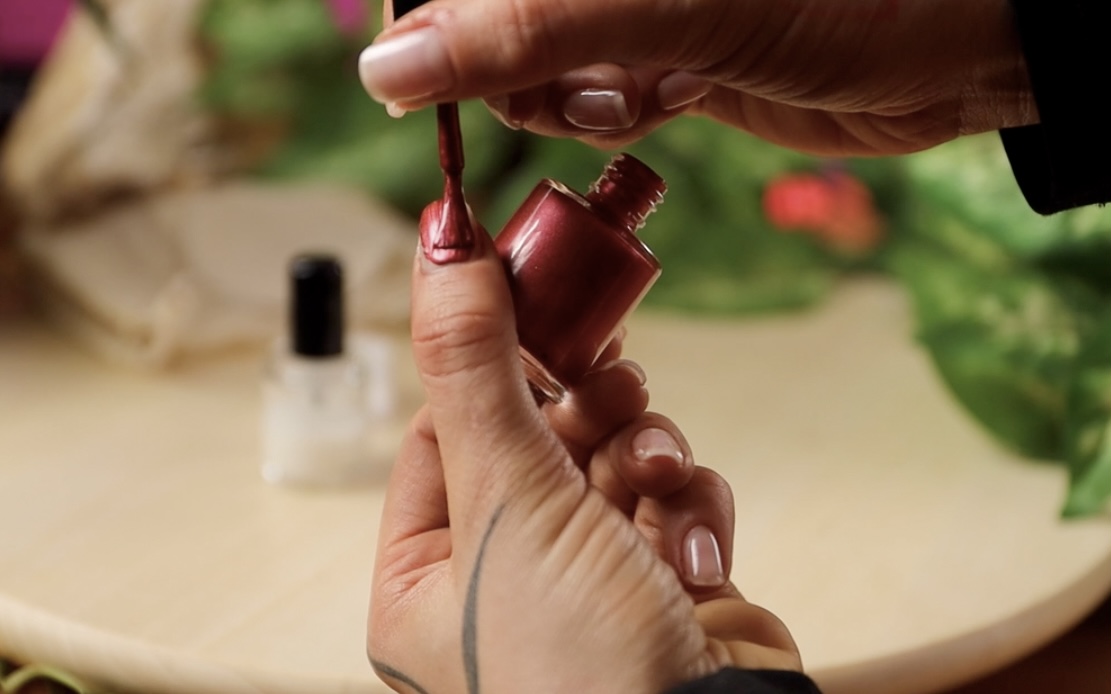
Minimalism has its charm. But if you love colourful nails 💅 and want a shade that’s truly one of a kind, give this simple recipe a try. All you need is a ready-made nail polish base, a cosmetic-grade pigment, and a little creativity.
You can mix a soft pearlescent finish, a bold vibrant shade, or even a glitter-packed polish. Best of all, you’ll know exactly what you’ve put into it.
🧪 What You’ll Need
For one 10 ml bottle:
-
8 g ready-made nail polish base
-
approximately 0.4–0.8 g cosmetic pigment
-
optionally, up to 0.04 g hydrolysed rice protein
-
a clean, completely dry nail polish bottle with a brush
-
precision scales
-
a small mixing container and stirrer
-
a small funnel
It’s best to start with a smaller amount of pigment. Mica creates a pearlescent or metallic effect, while coloured oxides produce richer, more opaque shades. Always use cosmetic-grade pigments that are suitable for nail polish.
GG tip: Sadly, no. Ordinary craft glitter, food colouring, fruit powders, or herbal powders don’t belong in nail polish. That said, if you’ve had good, well-tested results with a specific ingredient, feel free to experiment.
What’s Inside the Ready-Made Base?
For this recipe, we chose a ready-made nail polish base from a Czech online supplier of cosmetic ingredients. This isn’t simply a clear nail polish. It’s a carefully formulated blend of solvents, film-forming ingredients, a plasticiser, and other components that influence drying time, shine, durability, and how evenly the pigment is dispersed.
According to the manufacturer, the solvents are derived from plant-based raw materials, specifically potatoes, cassava, maize, and wheat. So that’s definitely a plus 🙂. The base is also free from benzophenone, toluene, formaldehyde, phthalates, nickel, and parabens. It dries quickly, can be used as both a base coat and a top coat, and leaves nails with a glossy finish.
However, the fact that some ingredients originate from plants doesn’t mean the entire product is completely natural. The base still contains chemically processed substances as well as volatile, highly flammable solvents. So be careful… keep it well away from candles, cigarettes, gas hobs, and any other sources of ignition.
Butyl Acetate and Ethyl Acetate are volatile solvents. They allow the polish to spread easily and dry quickly because they gradually evaporate after application. Their vapours may irritate the eyes and respiratory tract and, at higher concentrations, can cause drowsiness or dizziness.
Nitrocellulose is produced by chemically modifying cellulose, often obtained from cotton. Once the solvents have evaporated, it forms the hard, glossy film that remains on the nail.
Isosorbide Dicaprylate/Caprate acts as a plasticiser. It helps prevent the dried polish from becoming brittle or cracking.
Adipic Acid/Neopentyl Glycol/Trimellitic Anhydride Copolymer is a synthetic polyester resin. It improves adhesion, gloss, and durability. In the liquid base it is fully dissolved, so it isn’t present as microplastic particles. However, when nail polish chips off, tiny polymer fragments may still be released.
Stearalkonium Bentonite is a modified clay. It thickens the mixture and helps prevent the pigment from settling at the bottom of the bottle too quickly.
Source: GreenScan
✨ Method
-
Weigh the pigment into a clean, completely dry mixing container.
-
Add about one-third of the nail polish base and stir thoroughly until all the lumps have disappeared.
-
Add the remaining base and mix again until smooth.
-
If you’d like to use hydrolysed rice protein, add only a very small amount. The manufacturer recommends a maximum concentration of around 0.5%.
-
Carefully pour the finished mixture into the nail polish bottle using a small funnel. Don’t fill the bottle right to the top, as the brush will take up some of the space.
-
Close the bottle and shake it thoroughly.
Žaneta: “I usually do it by eye… I just add a bit here and there until it looks right.” 😀
Test the shade on a single nail or a nail swatch. If you’d like a more intense colour, add a little more pigment. Keep in mind that too much pigment can make the polish thicker, increase drying time, or cause it to chip more easily.
🔧 How to Use Your Nail Polish
Apply thin coats to clean, dry nails. Allow the first coat to dry completely before applying the second.
Shake the bottle well before every use, as the pigment may gradually settle over time.
Safety 🙂🏥
Work in a well-ventilated room. Prepare the polish well away from candles, cigarettes, cookers, sparks, and any other sources of ignition 🔥.
Never heat the nail polish base. When working with powdered pigments, avoid inhaling the dust or getting it into your eyes.
Do not apply the polish to damaged or irritated nails or the surrounding skin. If you experience burning, itching, or any other irritation, remove the polish immediately.
🌍 What About the Environment?
Choosing a nail polish base that is free from toluene, phthalates, and formaldehyde resins can be a more environmentally conscious option. However, the polish still contains volatile organic solvents.
Only mix as much polish as you genuinely expect to use. Never pour leftover nail polish or nail polish remover down the sink or toilet. Bottles containing leftover polish should be disposed of with general household waste or according to your local authority’s guidelines for chemical waste disposal 🗑️.
How to Remove Your Nail Polish
Neither natural oils, lemon juice, nor vinegar will reliably remove conventional nail polish. Nail polish needs a solvent to dissolve it.
If you’re looking for a gentler option, choose an acetone-free nail polish remover, for example one based on ethyl lactate. Ethyl lactate can be produced from plant-derived raw materials and readily biodegrades in the environment. Ideally, choose a remover enriched with glycerine or plant oils to help minimise dryness of both the nails and the surrounding cuticles.
Soak a cotton pad with the remover and press it gently onto the nail for a few seconds before wiping the polish away. Avoid excessive rubbing. Once you’ve finished, wash your hands and treat your nails and cuticles with a nourishing hand cream or a drop of plant oil.
Even gentler nail polish removers are still solvents. Always use them in a well-ventilated room, keep them away from flames, and use only as much as you need.
📦 Storage and Shelf Life
Store your nail polish tightly closed, away from direct sunlight, heat, and any sources of ignition. Keep it out of the reach of young children.
Write the date of preparation on the bottle. The shelf life depends on the manufacturer’s recommendations for the nail polish base you used. If the polish develops a noticeably different smell, changes colour, or its consistency changes significantly, it’s time to dispose of it rather than use it again. 💅

0 komentarjev