
Expand your environmental science skills with hands-on experiments using everyday cosmetics
What is it about?
This GG₂ Labtorials brings you two engaging formats: Mini Handbook and Watch & Do videos. Both empower students to explore the environmental and biological impacts of cosmetic products through practical, hands-on experiments. They encourage critical thinking, scientific curiosity, and environmental awareness.
The five core experiments are designed for both beginners and advanced learners, making the content accessible and adaptable for all.
Which topics are covered there?
The tutorials guide students through a variety of activities: from making natural alternatives like soaps and scrubs, to investigating how cosmetic chemicals influence plant growth and water quality.
Students will decode product labels, compare ingredients, and explore sustainable alternatives. By combining simple materials with scientific methods, they gain valuable skills in observation, analysis, and responsible decision-making.
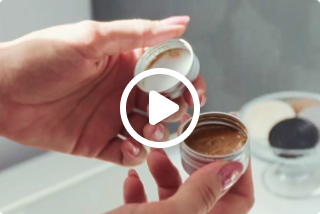
1. Making Natural Soap and Body Scrub
DIY with natural abrasives as alternatives to microplastics
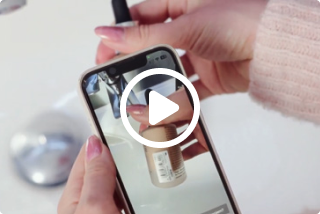
2. Decoding Chemicals on Cosmetic Labels
Making Healthy and Responsible Choices
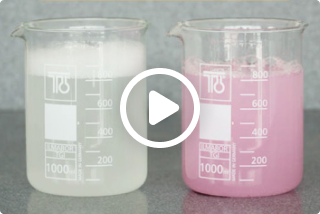
3. The Science of Cleaning Water
Cleaning Up Cosmetic Wastewater with Filtration
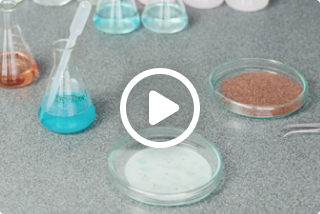
4. Lepidium Test
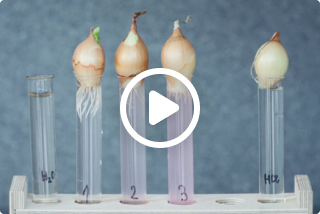
5. Allium Test
Who created GG₂ LABtorials?
The Faculty of Environmental Protection (FVO) is an independent institution of higher education that teaches environmental protection in the broadest terms. The teachings overlap in natural sciences, engineering, bioengineering, and social and humane arts. The faculty was founded as the Environmental Protection College in 2006 and became a faculty in 2022.
FVO offers two Bologna-compliant courses, a three-year undergraduate and a two-year postgraduate master’s study. Research activities on the faculty are conducted in the scope of various national and international projects, such as target research programmes for end-users and various EU programmes. The faculty is a holder of the new Erasmus certificate for tertiary education for the period 2021-2027, with which it has the possibility of cross-institutional connectivity in the educational, apprenticeship and research fields.


The GreenGate project (reg. n. 2021-1-CZ01-KA220-ADU-000026171) and GreenGate₂ project (reg. n. 2023-2-CZ01-KA220-YOU-000174554) were implemented as part of the Erasmus+ programme with financial support from the European Union.
Funded by the European Union. Views and opinions expressed are however those of the author(s) only and do not necessarily reflect those of the European Union or the European Education and Culture Executive Agency (EACEA). Neither the European Union nor EACEA can be held responsible for them.
This platform follows the Creative Commons agreement. Attribution-NonCommercial-NoDerivatives (CC BY-NC-ND) - https://creativecommons.org/licenses/by-nc-nd/4.0/